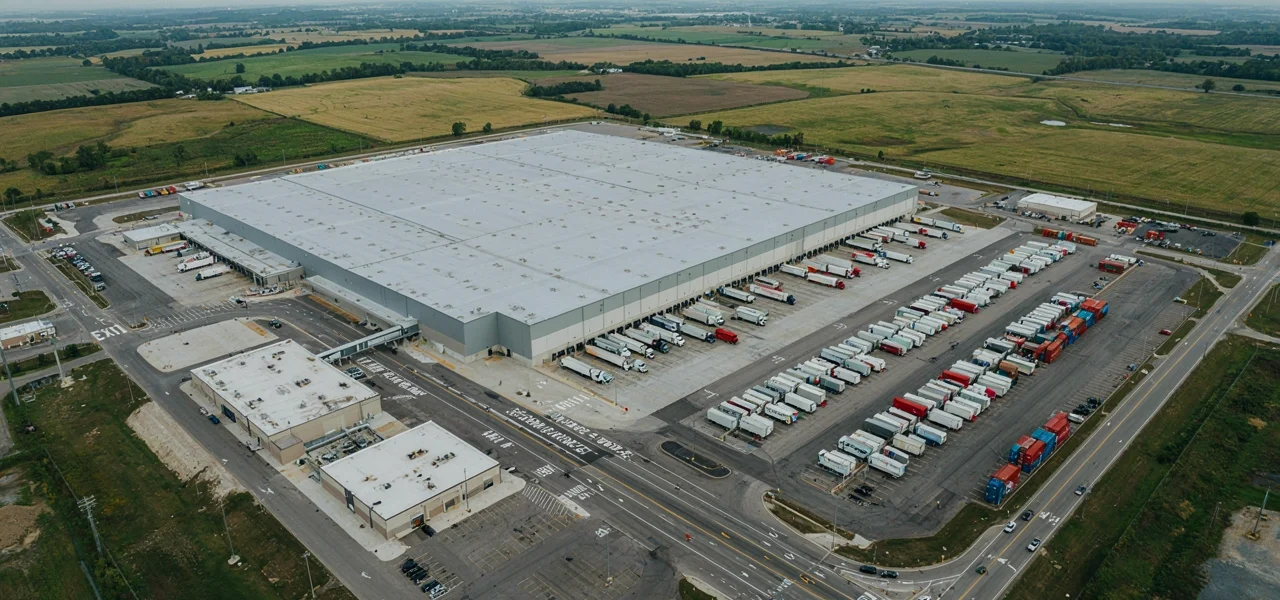
In the Netherlands’ industrial and logistics real estate market, an attractive property is no longer defined by location and size alone. Its operational performance, energy capacity, sustainability credentials, legal clarity and future adaptability increasingly determine its investment appeal. For owners and occupiers, understanding what makes an asset acquisition-ready can create opportunities long before a decision to sell is made.
Beyond Location
A Changing Definition of Asset Quality
The Netherlands continues to play a strategic role in Europe’s industrial and logistics network, supported by its international connectivity, established infrastructure and access to major consumer and manufacturing markets.
However, the market is becoming increasingly selective. Investors are paying closer attention to the quality of individual assets, while occupiers are reassessing whether their existing facilities can support evolving operational requirements. According to Cushman & Wakefield’s Q2 2026 market update, Dutch industrial and logistics occupier take-up reached approximately 1.8 million sqm in the quarter, up 12% year-on-year. Yet supply increased to approximately 7.7 million sqm, highlighting a growing distinction between well-positioned properties and buildings facing greater leasing challenges.
This changing environment raises an important question for property owners: if an investor were to assess your asset today, would it meet their acquisition criteria? An acquisition-ready asset is one that can withstand commercial, technical, legal, financial and environmental scrutiny, while offering a clear proposition for future ownership.
1. Location and Connectivity
The Foundation of Investment Value
Location remains fundamental, but investors increasingly look beyond geographical positioning. For Dutch industrial and logistics properties, proximity to major transport corridors, ports, distribution networks, labour markets and end consumers influences both occupier demand and long-term investment potential.
Established logistics clusters such as Rotterdam-Maasvlakte, Venlo-Venray, Tilburg-Waalwijk, Moerdijk-Bred and Eindhoven-Helmond continue to attract attention because of their strategic roles within national and European supply chains. However, an acquisition assessment also considers practical connectivity:
- Accessibility to motorways and multimodal transport infrastructure
- Distance to relevant customers, suppliers and distribution networks
- Availability of skilled labour and supporting services
- Potential traffic restrictions and limitations on heavy transport
- Future infrastructure developments and regional planning
For owners, an asset’s location story should be supported by evidence, not simply described as strategically positioned.
For occupiers considering a sale-and-leaseback, location is equally important. A facility that is operationally critical to the business may have investment value beyond its immediate real estate characteristics.
2. Energy Readiness
The Growing Importance of Grid Capacity
One of the most significant challenges facing Dutch industrial and logistics real estate is electricity grid congestion.
As businesses electrify their operations, introduce automated warehouse systems, expand EV fleets and install renewable energy infrastructure, access to sufficient electricity is becoming an increasingly important property consideration. Savills’ 2025 research on Dutch grid congestion highlighted that 66.4% of logistics properties were located in areas experiencing electricity consumption congestion.
This has direct implications for acquisition readiness. A modern building with excellent specifications may still face limitations if its contracted electricity capacity cannot support its intended use.
Owners should therefore establish:
- Existing contracted electricity capacity
- Actual electricity consumption and peak demand
- Grid connection agreements and available capacity
- Solar PV installation details and energy generation
- Battery storage feasibility
- EV charging infrastructure and expansion possibilities
- Any restrictions affecting electricity feed-in or consumption
Energy readiness is not simply about having solar panels on the roof. It is about understanding whether the property can support the operational and technological requirements of future occupiers.
For RENEW Real Estate (RRE), these considerations form part of evaluating an asset’s acquisition potential, redevelopment possibilities and suitability for future occupier requirements.
3. Sustainability and ESG
From Good Practice to Investment Consideration
Sustainability is increasingly influencing investment decisions across the European industrial and logistics sector. Energy performance, carbon emissions, building materials, water management and climate resilience are becoming relevant to both investors and occupiers.
The distinction between modern, efficient properties and ageing industrial stock is becoming more pronounced. Older buildings may still offer attractive locations, but could require significant investment to remain competitive.
For owners, preparing an ESG information pack can help demonstrate:
- Energy performance and consumption history
- Existing sustainability certifications, including BREEAM, where applicable
- Solar energy and other renewable installations
- Insulation, lighting and HVAC specifications
- Water management and biodiversity measures
- Climate-related risks and adaptation measures
- Planned improvements and associated investment requirements
Importantly, sustainability should be assessed alongside commercial feasibility. A building does not necessarily need to be fully modernised before it becomes acquisition-ready. However, buyers need clarity on its current condition, improvement requirements and potential future costs.
This is particularly relevant to brownfield assets, where redevelopment and refurbishment can create value while making more efficient use of existing land and infrastructure.
4. Legal and Technical Documentation
Removing Uncertainty Before Due Diligence
Even an attractive property can encounter transaction delays when essential documentation is incomplete, inconsistent or difficult to verify. Acquisition readiness requires a well-organised information package that enables potential investors to understand precisely what they are evaluating.
This typically includes:
Legal documentation- Land ownership and cadastral information
- Zoning and permitted land-use documentation
- Environmental permits and relevant approvals
- Lease agreements and occupancy arrangements
- Easements, access rights and other restrictions
- Building plans and specifications
- Structural and technical inspection reports
- Roof condition and maintenance history
- Fire safety and compliance documentation
- Building services and installation details
- Environmental assessments and contamination reports, where relevant
For industrial properties, particular attention should be given to permitted activities, environmental obligations and operational restrictions. Under the Dutch Omgevingswet framework, understanding the applicable environmental plan and relevant permit requirements is especially important when considering changes to property use or redevelopment.
A transparent documentation process helps buyers identify potential risks earlier and reduces unnecessary uncertainty during negotiations.
5. Operational Suitability
Does the Asset Work for Today’s Occupier?
An industrial or logistics building should be evaluated not only as a physical structure but also as an operational environment. Changing supply chains, automation, e-commerce, nearshoring and strategic inventory management are influencing occupier requirements across Europe. Modern logistics facilities increasingly need to accommodate efficient loading operations, higher throughput, advanced storage systems and adaptable layouts.
For acquisition readiness, owners should consider:
- Clear height and warehouse configuration
- Floor loading capacity
- Loading docks and yard depth
- Internal circulation and vehicle access
- Fire protection systems
- Automation and technological infrastructure
- Office-to-warehouse ratios
- Expansion or reconfiguration potential
These characteristics are particularly relevant to existing owner-occupied properties. An older facility may not meet every modern requirement, but its underlying location, land configuration and redevelopment potential could still make it attractive.
The key is to distinguish between limitations that can be addressed through investment and those that fundamentally restrict future use.
6. Commercial Clarity
Making the Investment Proposition Understandable
For investors, an acquisition is ultimately a financial decision. A property’s commercial attractiveness depends on its income profile, occupational stability, lease structure, operating costs and potential for future value creation.
Owners preparing an asset for acquisition should have a clear understanding of:
- Current rental income and occupancy
- Lease duration, renewal provisions and break options
- Tenant concentration and covenant strength
- Maintenance expenditure and capital expenditure requirements
- Market rental positioning
- Potential vacancy or reletting considerations
- Opportunities for redevelopment, expansion or alternative use
For owner-occupiers, the analysis can be different. A business may occupy its own property without receiving rental income. In such cases, the property’s investment proposition needs to consider its location, physical characteristics, potential rental value and suitability for alternative ownership structures.
7. Future Adaptability
Preparing for What Comes Next
One of the emerging themes in Dutch and European industrial real estate is the growing importance of retrofit, brownfield development and adaptable buildings. Limited land availability, planning complexity, grid constraints and sustainability requirements are influencing the development pipeline.
JLL’s 2026 Dutch industrial and logistics outlook identifies retrofit and brownfield development as increasingly important market themes. For property owners, this creates an opportunity to evaluate existing assets differently. Could an underutilised site accommodate an extension? Could an outdated warehouse be modernised? Could an industrial facility support a different occupier profile? Is there scope for a built-to-suit redevelopment?
These questions can reveal opportunities that a conventional property valuation may not fully capture.
Future adaptability does not guarantee additional value. However, a documented assessment of development potential, planning constraints and investment requirements can help investors understand the available options.
How RENEW Real Estate Approaches Acquisition Readiness
At RENEW Real Estate (RRE), acquisition readiness is viewed as a combination of property quality, commercial viability and transaction feasibility.
Working across industrial and logistics real estate in the Netherlands, RRE engages with property owners, occupiers, brokers and corporate advisers to identify opportunities involving acquisitions, sale-and-leaseback, commercial development and built-to-suit solutions.
The objective is to understand not just what an asset is worth today, but also how its location, operational characteristics and future potential align with investment requirements.
For owners and occupiers, this means that exploring an opportunity does not necessarily require an immediate decision to sell.
An early assessment can help identify documentation gaps, understand potential buyer requirements, evaluate alternative transaction structures and establish whether refurbishment or redevelopment could improve the property’s investment proposition.
With RRE’s focus on opportunities starting from €5 million across the Netherlands, the emphasis remains on understanding the fundamentals of each opportunity and its potential within the wider industrial and logistics market.
Acquisition-Ready Does Not Mean Transaction-Ready Alone
Preparing a logistics facility or asset for acquisition is ultimately about demonstrating its commercial potential, operational suitability and investment viability.
For owners and occupiers considering a sale, understanding what investors look for can help position their property for a more informed and efficient acquisition process.
At RENEW Real Estate (RRE), we actively explore acquisition opportunities across the Dutch industrial and logistics real estate market, including income-producing assets, owner-occupied properties and opportunities involving sale-and-leaseback or redevelopment.
Whether you are considering selling an existing property, releasing capital tied up in your real estate or exploring a potential transaction, RRE welcomes confidential discussions to assess its acquisition potential.