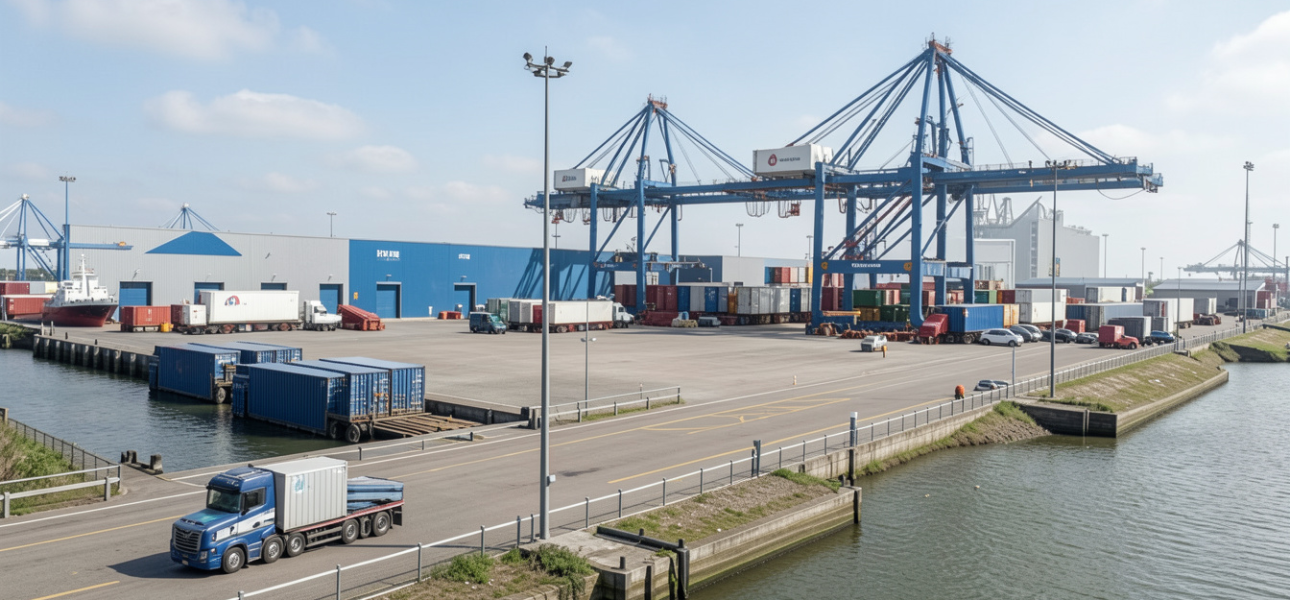
The southern Dutch province of Limburg is rapidly gaining prominence as a strategic multimodal logistics hub in Europe. Driven by cross-border connectivity, multimodal transport infrastructure, and growing demand for modern logistics real estate, the region is transforming into a logistics hotspot for occupiers, investors, and developers. As supply chains across Europe shift toward resilience, sustainability, and proximity to end markets, Limburg is increasingly featured in discussions around industrial developments, acquisitions, built-to-suit logistics facilities, and sale & leaseback strategies.
Strategic Location at the Heart of European Distribution
Limburg’s rise as a logistics hub is closely tied to its geographic positioning. Located at the crossroads of the Netherlands, Belgium, and Germany, the region provides direct access to major European consumption zones and production clusters. This cross-border advantage allows businesses to reach key markets within hours, making Limburg attractive for centralised distribution strategies.
The province also connects seamlessly with major ports such as Rotterdam and Antwerp, reinforcing its role as a gateway between seaports and inland markets. This strategic positioning is a major factor behind the region’s growing importance for logistics real estate investments and portfolio disposals.
Multimodal Connectivity Driving Logistics Growth
One of Limburg’s strongest differentiators is its multimodal infrastructure. The region offers integrated transport via road, rail, inland waterways, and air cargo. Within a one-hour drive, companies can access multiple barge terminals, rail terminals, and cargo airports, creating efficient distribution networks for domestic and cross-border trade.
The province hosts the largest inland rail terminal in the Netherlands, with connections extending to Asia, as well as the second-largest cargo airport, Maastricht Aachen Airport. These transport assets enable efficient multimodal logistics operations and reduce reliance on single transport modes.
In addition, key logistics corridors around Venlo and Venray provide strong highway links to Germany, Belgium, and major Dutch cities. Rail connectivity and inland shipping via the river Maas further enhance Limburg’s multimodal capabilities.
This connectivity supports logistics asset acquisitions , industrial developments, and let-out opportunities, as occupiers seek flexible supply chain locations.
Growing Logistics Real Estate Demand
As supply chains evolve, Limburg’s logistics real estate market is witnessing strong demand. Industrial zones such as Trade Port Venlo, Fresh Park Venlo, and Venray business parks host large-scale distribution centres and warehouse developments. These clusters form a mature logistics ecosystem that attracts both occupiers and investors.
Modern logistics developments in the region emphasise sustainability, automation readiness, and flexible layouts. For example, recent warehouse projects in North Limburg offer multimodal access and energy-efficient design, catering to e-commerce, retail, and distribution operators.
This trend aligns with broader European discussions around ESG-driven logistics real estate, electrification capacity, and automation-ready facilities. Developers are increasingly delivering built-to-suit warehouses, while investors pursue long-term income through acquisitions and sale & leaseback transactions.
Infrastructure Investments Strengthening the Logistics Hub
Ongoing infrastructure investments are further enhancing Limburg’s status as a multimodal logistics hub. New inland shipping terminals and logistics campuses are being developed to connect road, rail, and waterways more efficiently. These investments aim to reduce congestion, shift freight from road to water, and support sustainable logistics growth.
The logistics sector already plays a major economic role in Limburg, with hundreds of companies contributing significantly to employment and regional GDP. Continued investments in multimodal infrastructure and logistics campuses are expected to attract additional capital and drive further industrial development.
The Limburg’s Logistics Market
Several key trends are influencing Limburg’s emergence as a logistics hotspot:
- Supply Chain Regionalisation
- Sustainability & ESG Requirements
- E-commerce Expansion
- Automation & Smart Warehousing
Facilities designed for robotics and digital inventory systems are in demand.
- Capital Recycling & Sale & Leaseback
- Portfolio Disposals & Acquisitions
Companies are moving closer to end markets, increasing demand for cross-border logistics hubs.
Energy-efficient warehouses and multimodal transport reduce carbon footprints.
Growing distribution volumes require scalable logistics space.
Owners unlock capital while continuing operations.
Investors target core logistics corridors for stable returns.
These themes are widely discussed across the Netherlands and Europe, positioning Limburg as a future-proof logistics hub.
Benefits for Property Owners in Limburg
Property owners in Limburg benefit from strong occupier demand and growing investor interest. The region’s logistics fundamentals support:
- Attractive valuations for disposal opportunities
- Increased liquidity for sale & leaseback transactions
- Long-term tenant demand for modern logistics assets
- Opportunities for redevelopment and built-to-suit industrial developments
- Potential for let-out strategies in high-demand corridors
Owners can unlock capital while maintaining operational continuity, particularly through sale & leaseback structures.
Benefits for Logistics Occupiers
For occupiers, Limburg offers significant operational advantages:
- Multimodal access to European markets
- Reduced transit times and transport costs
- Availability of modern, scalable warehouse space
- Proximity to Germany, Belgium, and key ports
- Sustainable logistics infrastructure
- Flexible built-to-suit development options
These benefits support supply chain resilience and long-term operational efficiency.
Investment Momentum in Logistics Assets
Investor appetite for logistics real estate in Limburg continues to strengthen. The combination of strong fundamentals, cross-border connectivity, and modern infrastructure attracts capital seeking stable income-generating assets.
Institutional investors are increasingly pursuing acquisitions in logistics hotspots such as Venlo and Venray, while developers continue delivering high-spec warehouses aligned with occupier demand. The region’s growing liquidity supports portfolio expansion, repositioning strategies, and long-term investment partnerships.
RENEW Real Estate as an Investment Partner in Logistics Assets
As Limburg continues to evolve into a strategic multimodal logistics hub, investment partners play a critical role in supporting growth. RENEW Real Estate focuses on logistics property investment solutions aligned with occupier needs and long-term market trends.
By acting as an investor and partner in acquiring logistics assets , RENEW Real Estate supports acquisitions, sale & leaseback transactions, and development-led strategies. The firm works with property owners exploring disposals, while also partnering with occupiers seeking built-to-suit facilities and scalable logistics space.
Through capital deployment into core logistics markets, RENEW Real Estate contributes to industrial developments, structured investments, and long-term value creation. As Limburg strengthens its position as a European logistics hotspot, collaboration between occupiers, owners, and capital partners will remain essential for unlocking growth opportunities.
Limburg Positioned for Continued Growth
Limburg’s strategic location, multimodal infrastructure, and growing logistics real estate market position the region as a key hub in Southern Netherlands. With strong occupier demand, ongoing infrastructure investment, and increasing investor interest, the province is emerging as one of Europe’s most attractive logistics destinations.
For property owners, occupiers, and investment partners alike, Limburg offers a compelling combination of connectivity, scalability, and long-term growth potential reinforcing its status as a leading multimodal logistics hub in Europe.