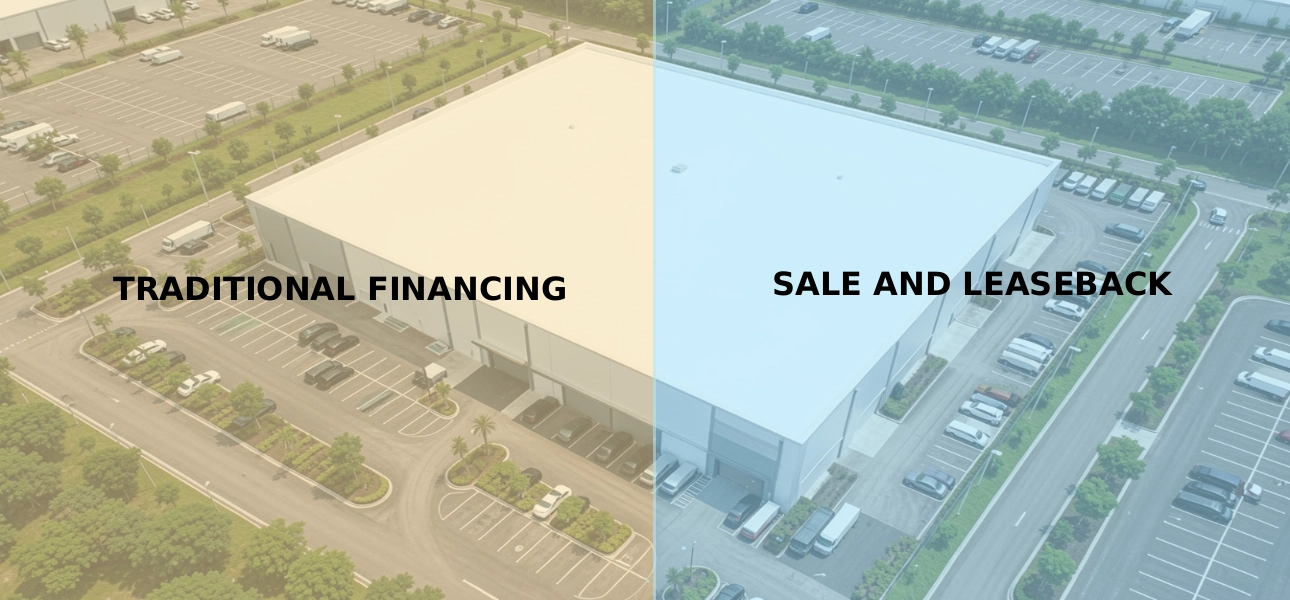
For owners of industrial, logistics, and commercial real estate in the Netherlands, securing capital for expansion, sustainability initiatives, or business growth often comes down to two primary financing options: traditional bank financing or a sale and leaseback transaction.
With higher borrowing costs, evolving lending criteria, ESG investment requirements, and continued demand for strategically located industrial and logistics assets, businesses are increasingly rethinking how they finance future growth. Rather than taking on additional debt, many companies are unlocking the value tied up in the real estate they already own.
A well-structured sale and leaseback allows businesses to convert property equity into immediate capital while continuing to operate from the same location. This strategy is becoming increasingly attractive for manufacturers, logistics operators, distributors, e-commerce businesses, and commercial property owners seeking greater financial flexibility.
As a trusted real estate investment firm, RENEW Real Estate (RRE) partners with industrial and commercial property owners through strategic acquisitions, sale and leaseback solutions, industrial developments, and built-to-suit projects that support long-term business growth.
What is a Sale & Leaseback?
A sale and leaseback is a transaction where a company sells its property to a real estate investment company and immediately leases it back under a long-term agreement. The business receives immediate capital while continuing to operate from the same premises without disruption.
This financing strategy is commonly used for:
- Warehouses
- Logistics assets
- Distribution centres
- Manufacturing facilities
- Industrial properties
- Commercial real estate
Instead of borrowing against the property, businesses unlock the value of an existing asset while preserving operational continuity.
What is Traditional Bank Financing?
Traditional bank financing involves securing a loan against business assets or real estate. While it remains a common funding method, businesses often face stricter lending conditions, higher interest rates, loan-to-value restrictions, and lengthy approval processes.
For companies looking to invest in automation, sustainability, expansion, or acquisitions, relying solely on bank financing can limit flexibility. As a result, many business owners are exploring alternative funding strategies that improve liquidity without increasing debt.
Sale & Leaseback vs Traditional Bank Financing
| Comparison | Sale & Leaseback | Traditional Bank Financing |
|---|---|---|
| Access to Capital | Unlocks property value | Limited by lending criteria |
| Debt | No additional borrowing | Increases debt obligations |
| Liquidity | Immediate capital release | Loan-based funding |
| Operations | Continue uninterrupted | Continue uninterrupted |
| Financial Flexibility | High | Moderate |
| Balance Sheet | Releases tied-up capital | Adds liabilities |
While both options provide access to capital, a sale and leaseback enables businesses to release equity already tied up in owned real estate rather than taking on additional financial obligations.
Why Are More Businesses Choosing Sale & Leaseback?
The Netherlands continues to be one of Europe’s strongest industrial and logistics markets, driven by international trade, manufacturing, e-commerce, and supply chain innovation. Businesses are investing in warehouse automation, digital technologies, and sustainable facilities to remain competitive.
At the same time, many companies own valuable industrial or commercial property that represents a significant portion of their balance sheet.
Rather than allowing capital to remain locked in real estate, a sale and leaseback provides immediate liquidity that can be reinvested into:
- Business expansion
- New production capacity
- Warehouse automation
- Technology upgrades
- Sustainability initiatives
- Working capital
- Strategic acquisitions
This allows businesses to invest in growth while continuing to operate from their existing location.
Who Should Consider a Sale & Leaseback?
A sale and leaseback is suitable for businesses of all sizes that own valuable real estate and want to strengthen their financial position.
It is particularly beneficial for:
- Logistics and supply chain companies
- Manufacturing businesses
- E-commerce fulfilment operators
- Food and beverage producers
- Pharmaceutical companies
- Wholesale and distribution businesses
- Family-owned industrial companies
- Commercial property owners
Whether planning expansion, improving cash flow, or funding new investments, unlocking capital from owned property can provide greater strategic flexibility than traditional financing alone.
How Does RENEW Real Estate Support Property Owners?
RENEW Real Estate (RRE) is an experienced real estate investment firm specialising in the acquisition and development of strategically located industrial, logistics, and commercial real estate across the Netherlands.
Rather than acting solely as an investor, RRE works as a long-term strategic partner, helping businesses unlock the value of their real estate while supporting future operational growth.
RRE’s expertise includes:
- Industrial and commercial real estate acquisitions
- Logistics asset acquisitions
- Sale and leaseback solutions
- Industrial developments
- Built-to-suit developments
- Long-term property investment partnerships
Whether acquiring an existing warehouse, structuring a sale and leaseback transaction , or delivering a customised built-to-suit development, RRE provides tailored real estate solutions aligned with each client’s operational and financial objectives.
Is Sale & Leaseback Better Than a Bank Loan?
The answer depends on a company’s long-term strategy.
If the objective is simply to secure financing, a traditional bank loan may be appropriate. However, if the goal is to release capital, improve liquidity, support expansion, or invest in sustainability without increasing debt, a sale and leaseback can offer greater financial flexibility.
Many businesses now view their real estate not only as an operational asset but also as a strategic financial resource capable of supporting future growth.
Frequently Asked Questions
Is a sale and leaseback only for logistics companies?
No. It is widely used by manufacturing, industrial, commercial, wholesale, pharmaceutical, and distribution businesses that own their premises.
Can a company continue operating after selling its property?
Yes. One of the key advantages of a sale and leaseback is that the business remains in the same location under an agreed lease, ensuring uninterrupted operations.
Can sale and leaseback fund business expansion?
Yes. Many companies use the released capital to expand facilities, invest in automation, improve sustainability, strengthen working capital, or acquire additional businesses.
Why are sale and leaseback transactions becoming more popular?
Rising financing costs, increased investment in sustainable facilities, growing demand for modern industrial properties, and the need for greater financial flexibility have made sale and leaseback an increasingly attractive option for businesses across the Netherlands.
Looking Beyond Traditional Financing
As financing needs continue to evolve, businesses are increasingly viewing real estate as more than just an operational necessity. A well-structured sale and leaseback can unlock significant capital, improve liquidity, and create opportunities for long-term growth without disrupting day-to-day operations.
As a trusted logistics real estate investment firm and property investment company, RENEW Real Estate (RRE) partners with industrial, logistics, and commercial property owners across the Netherlands through acquisitions, sale and leaseback solutions, industrial developments, and built-to-suit projects. By combining market expertise with long-term investment strategies, RRE helps businesses transform their real estate into a catalyst for sustainable growth.
Whether you’re exploring a sale and leaseback, seeking a strategic acquisition partner, or planning a future industrial development, working with an experienced investment company like RRE can help you unlock the full potential of your real estate while positioning your business for long-term success.