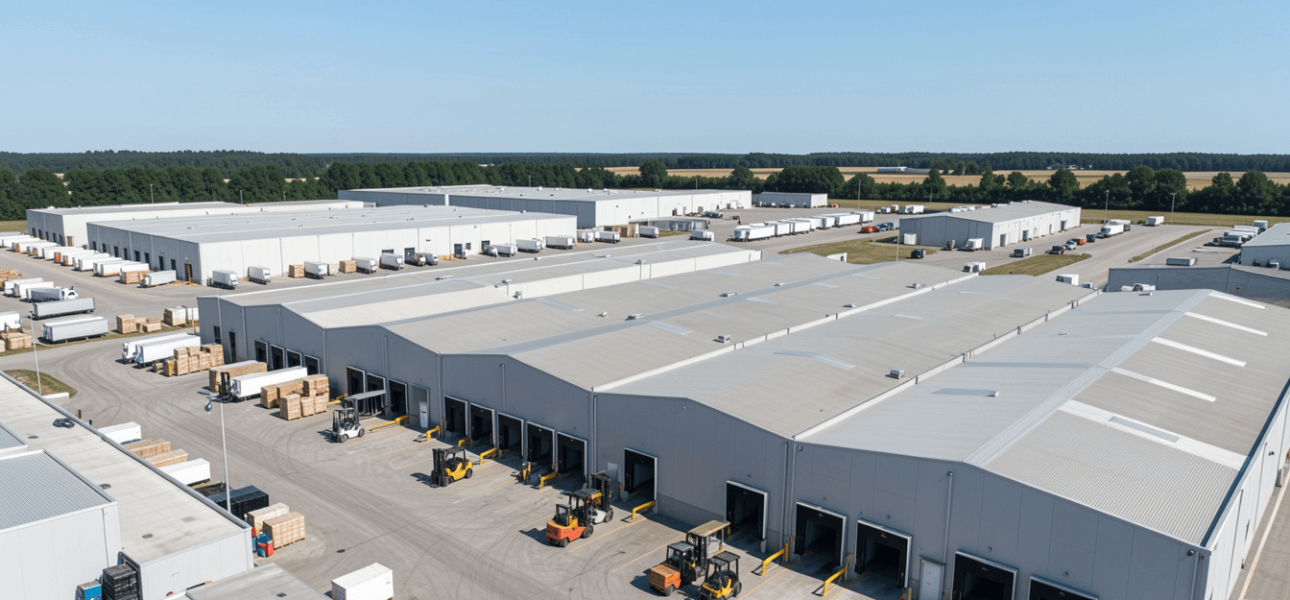
Mergers, acquisitions, divestments, and corporate restructuring have become increasingly common across Europe’s logistics, manufacturing, and industrial sectors. As businesses adapt to changing supply chains, evolving customer demands, sustainability requirements, and economic uncertainty, many companies are re-evaluating how capital is allocated across their operations.
One area receiving increased attention is corporate real estate.
Across the Netherlands, many businesses continue to own logistics facilities, warehouses, production sites, and industrial assets that were acquired years or even decades ago. While these properties often represent significant value on the balance sheet, they can also limit financial flexibility during periods of transformation.
As a result, Sale & Leaseback transactions are increasingly being used as a strategic tool to support mergers and acquisitions (M&A), corporate restructuring initiatives, and long-term growth plans.
Why Corporate Real Estate Matters During M&A
One of the most common questions during acquisitions is:
Should the business continue to own its real estate, or should capital be redeployed elsewhere?Historically, many Dutch logistics and industrial companies preferred property ownership as a long-term investment strategy. However, today’s business environment is different.
Companies now need capital for:
- Business expansion
- Technology investments
- Automation and robotics
- ESG initiatives
- Supply chain resilience
- New market entry
- Debt reduction
At the same time, institutional investors continue to show strong demand for logistics and industrial real estate across the Netherlands.
This creates an opportunity to unlock value from owned assets without disrupting operations.
What Is a Sale & Leaseback Transaction?
A Sale & Leaseback transaction occurs when a company sells its property to an investor and simultaneously signs a long-term lease to continue occupying the facility.
The result is straightforward:
- The company releases capital tied up in real estate.
- Operations continue from the same location.
- The investor acquires a long-term income-producing asset.
- The business gains greater financial flexibility.
For many Dutch occupiers, this approach transforms a non-core asset into working capital that can support strategic objectives.
Supporting Acquisitions and Business Expansion
M&A activity often requires significant capital.
Whether acquiring a competitor, expanding into a new region, or integrating operations after a merger, businesses frequently need additional liquidity.
Rather than relying solely on bank financing, many companies are exploring alternative capital solutions.
A Sale & Leaseback transaction can provide:
- Acquisition funding
- Working capital
- Integration capital
- Expansion funding
- Balance sheet optimisation
For example, a logistics operator with facilities in Tilburg, Venlo, or Moerdijk may choose to monetize a warehouse asset and redirect the proceeds toward acquiring complementary businesses or expanding operational capacity.
This allows management teams to focus capital on growth rather than property ownership.
Corporate Restructuring and Portfolio Optimisation
Corporate restructuring is another area where Sale & Leaseback transactions are increasingly relevant.
Businesses undergoing restructuring often seek to:
- Simplify ownership structures
- Improve capital efficiency
- Reduce debt exposure
- Strengthen liquidity
- Focus on core operations
Real estate is frequently one of the largest assets on a company’s balance sheet.
By unlocking value from owned facilities, companies can accelerate restructuring initiatives while maintaining operational continuity. This is particularly relevant for family-owned businesses and long-established industrial companies throughout the Netherlands, many of which have accumulated significant real estate holdings over time.
Why the Netherlands Is Well Positioned
The Dutch logistics market continues to attract strong investor interest.
Key logistics corridors remain highly sought after due to their strategic importance within European supply chains.
These include:
- Rotterdam-Moerdijk Logistics Corridor
- Tilburg-Waalwijk Distribution Region
- Venlo Cross-Border Logistics Hub
- Eindhoven Industrial Cluster
- Schiphol Airport Logistics Zone
- Gelderland Logistics Corridor
Properties located within these regions often benefit from:
- Strong occupier demand
- Excellent infrastructure
- Access to major consumer markets
- Multimodal transport connections
- Long-term rental growth potential
As a result, institutional investors remain active buyers of logistics and industrial assets, creating favourable conditions for Sale & Leaseback transactions.
Sale & Leasebacks and Succession Planning
Another trend emerging in the Dutch market is the use of Sale & Leaseback structures as part of succession planning. Many privately owned businesses have substantial value tied up in operational real estate.
As ownership transitions between generations, shareholders often seek ways to:
- Release equity
- Rebalance ownership structures
- Support management buyouts
- Facilitate shareholder exits
A Sale & Leaseback transaction can provide liquidity while allowing the business to continue operating without disruption. This approach helps unlock value without requiring relocation or operational changes.
The Role of Institutional Investors
Institutional investors are playing an increasingly important role in the Dutch logistics real estate market. Pension funds, insurance companies, investment managers, and specialist logistics investors are actively seeking:
- Distribution centres
- Industrial facilities
- Warehouses
- Build-to-suit assets
- Sale & Leaseback opportunities
These investors are attracted by long-term leases, mission-critical facilities, and strategic logistics locations. As the institutionalisation of logistics real estate continues, Sale & Leaseback transactions are becoming a preferred acquisition strategy for many investors.
Beyond Sale & Leaseback: Build-to-Suit and Development Opportunities
Corporate restructuring is not always limited to existing assets. Many businesses are simultaneously evaluating future operational requirements.
This includes:
- Facility consolidation
- Relocation strategies
- Expansion projects
- ESG upgrades
- Build-to-suit developments
In some cases, occupiers may sell an existing facility while partnering with investors and developers on a new build-to-suit logistics or industrial project. This creates a pathway toward modern, energy-efficient facilities while freeing up capital for business growth. Across regions such as Brabant, Limburg, Rotterdam, and Gelderland, demand for future-proof logistics facilities continues to drive development activity.
Why Investors Are Paying Attention to Corporate-Owned Logistics Real Estate
As mergers, acquisitions, corporate restructuring, and succession planning activities increase across the Netherlands, a growing number of logistics and industrial assets are coming to market.
Many occupiers own facilities that are critical to their operations but no longer essential to their capital allocation strategy. At the same time, institutional and private investors are actively seeking well-located logistics assets with strong occupier fundamentals and long-term relevance within European supply chains.
This convergence has created opportunities for direct logistics real estate investment.
RENEW Real Estate (RRE) is among the investors actively acquiring logistics and industrial assets across the Netherlands , particularly within established logistics corridors such as Rotterdam, Moerdijk, Tilburg, Waalwijk, Venlo, Eindhoven, and Gelderland.
In addition to acquiring income-producing logistics assets, RENEW Real Estate (RRE) invests in opportunities where occupiers seek to unlock capital through Sale & Leaseback transactions. These structures enable businesses to release value from owned real estate while continuing to operate from the same facility under a long-term lease agreement.
For occupiers navigating acquisitions, restructuring programmes, business expansion, or ownership transitions, this can provide access to capital without disrupting day-to-day operations. For investors, it offers exposure to strategically located logistics assets supported by long-term occupier demand.
As the Dutch logistics market continues to mature, direct acquisitions, Sale & Leaseback transactions, and build-to-suit opportunities are expected to play an increasingly important role in connecting corporate real estate with long-term investment capital.
The Changing Role of Logistics Real Estate in Corporate Strategy
As M&A activity, succession planning, and corporate restructuring continue across Europe, Sale & Leaseback transactions are likely to play an increasingly important role in corporate finance strategies.
For Dutch logistics and industrial occupiers, owned real estate can represent both an opportunity and a source of untapped capital.
The ability to unlock value, strengthen liquidity, support acquisitions, and invest in future growth while remaining operationally secure makes Sale & Leaseback one of the most effective tools available to businesses navigating change.
In a market where flexibility, efficiency, and capital allocation matter more than ever, the strategic role of logistics real estate is continuing to evolve. For many companies, the question is no longer whether real estate has value, but how that value can best support the next stage of business growth.