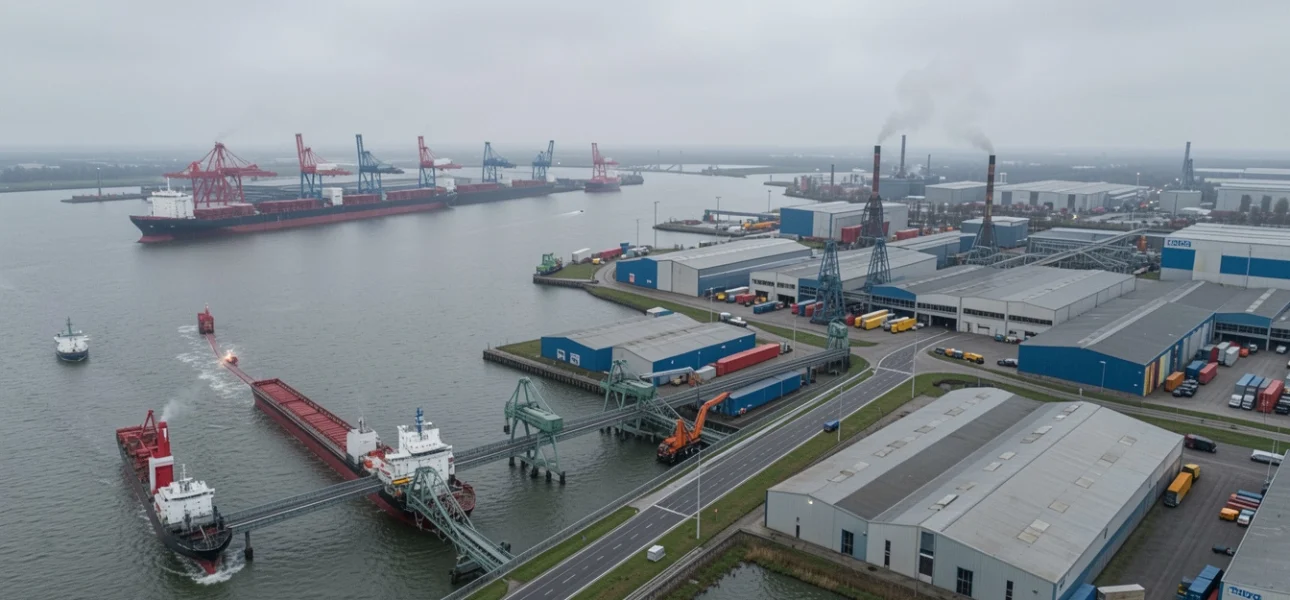
The Netherlands has long been recognized as Europe’s gateway for trade, connecting global supply chains through world-class ports, highways, inland waterways, and multimodal logistics infrastructure. While Rotterdam and Venlo often dominate discussions around logistics, the Arnhem-Nijmegen region is rapidly emerging as one of the country’s most strategic East-West logistics hubs, creating significant opportunities for investors, occupiers, and logistics real estate specialists.
As European supply chains evolve due to e-commerce growth, nearshoring strategies, and resilience-focused distribution models, companies are increasingly seeking locations that offer seamless connectivity between the Dutch ports and Germany’s industrial heartland. Arnhem-Nijmegen sits precisely at this intersection.
For organizations exploring logistics assets, industrial developments, or sale and leaseback opportunities, the region represents one of the Netherlands’ most promising logistics corridors.
Why Arnhem-Nijmegen Matters in European Logistics
The Arnhem-Nijmegen metropolitan region is strategically positioned between the Port of Rotterdam, the German Ruhr region, and major European consumption markets. It serves as a natural bridge connecting Western Europe with Central and Eastern Europe through an integrated transport network.
The region benefits from:
- Direct access to the A15 corridor
- Connections to the A12, A50, and A73 motorways
- Rail connectivity through the Betuwe freight corridor
- Inland waterway access via the Waal River
- Proximity to Germany for cross-border distribution
Developments around Park15 Logistics emphasize that the area is strategically located between Rotterdam and the Ruhr region, with strong road and water connectivity and future east-west improvements through the A15 extension. This positioning enhances freight movement across the Netherlands and into Germany.
Instead of functioning merely as a transit location, Arnhem-Nijmegen is becoming an integrated logistics ecosystem that supports warehousing, fulfillment, manufacturing, and distribution.
The Growing Importance of East-West Connectivity
One of the biggest discussions in European supply chains today revolves around network resilience rather than simply minimizing transportation costs.
Companies are redesigning logistics networks to:
- Reduce dependency on single distribution centers
- Improve cross-border delivery speeds
- Support omnichannel retail
- Increase inventory flexibility
- Build resilience against geopolitical and supply chain disruptions
This has accelerated demand for strategically located logistics real estate capable of serving multiple European markets simultaneously.
The Arnhem-Nijmegen corridor enables goods arriving through Dutch ports to move efficiently toward Germany and broader Central Europe, making it increasingly attractive for international occupiers.
Logistics Real Estate Is Becoming Strategic Infrastructure
Modern warehouses are no longer viewed simply as storage facilities.
Today’s logistics assets function as:
- Regional distribution centers
- E-commerce fulfillment hubs
- Value-added processing facilities
- Cross-docking operations
- Last-mile and middle-mile logistics platforms
As a result, investors increasingly evaluate logistics real estate based on connectivity, labor availability, sustainability, and multimodal access rather than only square footage.
Projects such as Park15 Logistics highlight this transformation, positioning large-scale logistics campuses along the A15 and Betuwe rail corridor with modern specifications for major logistics operators.
Industrial Developments Are Reshaping the Region
Arnhem-Nijmegen continues to attract industrial and logistics developments because of its ability to support both domestic and international supply chains.
Modern industrial parks increasingly incorporate:
- Sustainable building standards
- High-clearance warehouses
- Energy-efficient operations
- Electric vehicle infrastructure
- Smart logistics technologies
- Multimodal transportation options
Developers are responding to demand for larger, future-ready facilities capable of serving pan-European distribution requirements.
The combination of infrastructure investment and available development opportunities makes the region particularly attractive for long-term logistics strategies.
Sale and Leaseback: Unlocking Capital While Retaining Operations
One of the most significant trends across European logistics real estate is the growing adoption of sale and leaseback transactions.
Many occupiers own valuable logistics facilities that tie up substantial capital. Rather than using balance-sheet resources for real estate ownership, companies increasingly monetize these assets while continuing to operate from the same locations.
A sale and leaseback transaction allows businesses to:
- Unlock capital for expansion
- Improve liquidity
- Invest in automation and technology
- Fund acquisitions
- Maintain operational continuity
This strategy has become particularly relevant as businesses prioritize capital efficiency while maintaining access to strategically located logistics hubs.
For companies operating in Arnhem-Nijmegen, such structures can provide financial flexibility without disrupting supply chain operations.
Logistics Asset Acquisitions Continue to Gain Momentum
Institutional investors continue to view Dutch logistics real estate as one of Europe’s strongest asset classes.
Recent acquisitions in Nijmegen illustrate how international investors value the region’s proximity to Germany and its ability to serve millions of consumers within a short drive, reinforcing its role as a cross-border logistics location.
The investment thesis is straightforward:
- Strong occupier demand
- Limited supply of premium logistics space
- Excellent transportation infrastructure
- Stable long-term fundamentals
- Strategic European connectivity
As companies continue diversifying supply chains, logistics asset acquisitions are expected to remain an active investment theme.
Sustainability Is Becoming a Competitive Advantage
Another major discussion shaping European logistics is sustainability.
Corporate occupiers increasingly seek facilities that support:
- Lower carbon emissions
- Renewable energy integration
- Energy-efficient building design
- Sustainable transportation
- ESG reporting objectives
New logistics parks around Arnhem-Nijmegen are being developed with sustainability and innovation in mind, aligning with broader Dutch logistics strategies that encourage smarter use of infrastructure and cleaner freight movement.
Sustainable logistics real estate is therefore becoming both an operational necessity and an investment differentiator.
Backing the Next Generation of Logistics Infrastructure
As Europe’s logistics networks continue to evolve, strategically located real estate has become a critical business asset. RENEW Real Estate is not an intermediary or advisory firm, it is a direct investor focused on acquiring and partnering in high-quality logistics and industrial assets across the Netherlands.
The company actively seeks opportunities involving:
- Sale and leaseback transactions
- Logistics asset acquisitions
- Industrial developments
- Off-market logistics opportunities
- Long-term partnerships with occupiers and owners
RENEW Real Estate works directly with businesses that own strategically located logistics facilities, providing capital through acquisition structures that allow occupiers to continue operating from their properties while unlocking significant value from their real estate.
With a long-term ownership philosophy and a focus on key Dutch logistics corridors, RENEW Real Estate invests in assets that strengthen European supply chains and contribute to the continued growth of the Netherlands as one of Europe’s leading logistics markets.
The future of European logistics will depend on connectivity, resilience, and intelligent infrastructure investment. Arnhem-Nijmegen exemplifies these qualities by serving as a critical East-West gateway linking Dutch ports with Germany and wider European markets.
For logistics operators, the region offers efficient distribution capabilities. For investors, it presents attractive opportunities in logistics assets and industrial developments. For occupiers, sale and leaseback structures can unlock capital while preserving operational continuity.
As supply chains continue to evolve, Arnhem-Nijmegen is no longer simply a regional location, it is becoming one of the Netherlands’ most strategically important logistics hubs, supporting the next generation of European commerce.