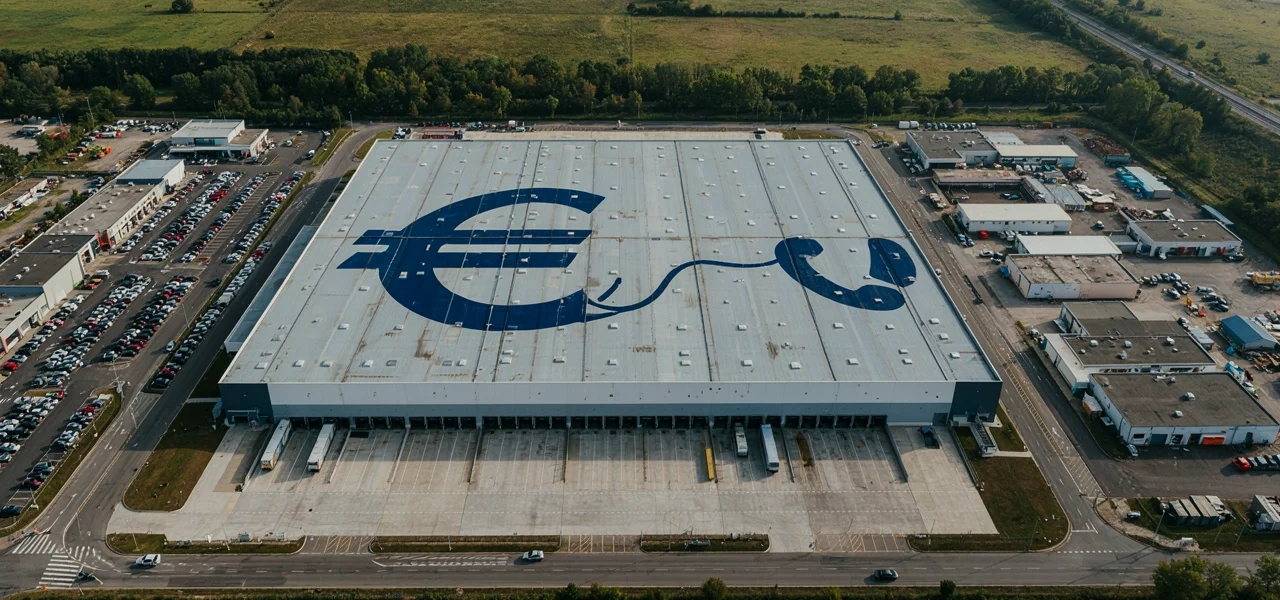
In Dutch logistics and industrial real estate, a Sale & Leaseback conversation does not necessarily begin when a company needs money. In many cases, it starts much earlier when an owner-occupier begins to question whether owning the property is still the best way to use the company’s capital.
For decades, owning the building from which a business operates has been a natural part of entrepreneurship in the Netherlands. A distribution centre, production facility or industrial site is often more than just a workplace. It can represent decades of investment, a strategic location and a significant asset on the balance sheet. For many family-owned and entrepreneurial businesses, the property and the company have grown together.
But circumstances change. The property may have increased substantially in value, while the business may have new opportunities that require capital. An acquisition may be on the horizon, production may need to expand, automation may require investment, or the company may simply want to strengthen its balance sheet. In such situations, the question is not necessarily whether the business should sell its property. It is whether the capital tied up in that property could be put to better use elsewhere.
That is where Sale & Leaseback becomes interesting.
More than a source of capital
A Sale & Leaseback allows an owner-occupier to sell its property to an investor while continuing to operate from the same location under a lease. The company releases capital from the property without necessarily disrupting its operations.
The distinction is important. A Sale & Leaseback does not have to be a response to financial pressure. It can instead be part of a broader capital-allocation strategy.
For a growing logistics company, for example, released capital could support an acquisition or expansion. For an industrial business, it could fund new machinery, automation or energy investments. For a family-owned company, it could provide greater flexibility around succession or shareholder liquidity.
The potential uses are broad:
- Business expansion or acquisitions
- Automation and operational investment
- Fleet renewal and electrification
- Energy transition
- Working capital
- Debt reduction
- Shareholder liquidity
- Funding future growth
The underlying question is therefore less about whether a company needs capital today and more about whether the capital currently invested in its property could generate greater strategic value elsewhere.
Why the Dutch market makes the conversation particularly relevant
The timing of this discussion is also important. The Dutch logistics and industrial market continues to experience strong demand for well-located and high-quality assets, while the availability of suitable development land and infrastructure remains constrained.
For occupiers, the challenge is increasingly not simply finding another building. It is finding another building that offers the same combination of location, accessibility, workforce, infrastructure, power capacity and operational suitability.
This is particularly relevant in established logistics and industrial hubs such as Venlo-Venray, Tilburg-Waalwijk, Rotterdam-Maasvlakte, Moerdijk-Breda, Eindhoven-Helmond, Almere-Lelystad and the wider Schiphol-Amsterdam area. Central corridors around Utrecht, Tiel and Geldermalsen, as well as the A12 and other major transport routes, remain strategically important for businesses that depend on efficient national or cross-border distribution.
A company operating from one of these locations may therefore have an asset that is difficult to replace.
And that changes the conversation.
If the location is strategically important and relocating would be costly or disruptive, selling the property does not necessarily have to mean leaving it. The ownership of the asset can change while the company’s operational presence remains.
Location, infrastructure and grid capacity
The importance of location is becoming even more apparent as the Dutch logistics and industrial sector evolves.
Companies are investing in automation, electrifying vehicle fleets, increasing energy efficiency and adapting facilities to meet changing operational requirements. At the same time, grid congestion has become a growing constraint in parts of the Netherlands.
For an industrial or logistics occupier, an existing location may already have infrastructure that would be difficult and expensive to replicate elsewhere. This can include an established electricity connection, transport access, loading infrastructure, planning history and proximity to customers and employees.
The building itself is therefore only part of the value equation.
The combination of property + location + infrastructure + operational continuity can be considerably more difficult to replace than the physical building alone.
This is one reason why Sale & Leaseback can be particularly relevant for owner-occupiers in the Netherlands. Rather than treating the property and the business as inseparable, the structure allows the company to reconsider the ownership of the real estate while maintaining continuity of operations.
The opportunity cost of owning
There is another side to the discussion that is sometimes overlooked.
Property ownership can provide stability and long-term value, but it also means that a significant amount of capital remains invested in an asset that may not be the company’s core business.
Consider an industrial or logistics company operating from a property worth €20 million. The company may have built substantial equity in the asset over the years. At the same time, management may be looking at an acquisition, a new production line, additional warehouse capacity or investment in automation.
The €20 million property may be an excellent real-estate investment. But that does not automatically mean it is the best use of capital for the operating business.
A Sale & Leaseback can potentially change that equation. The company continues operating from the property while releasing some of the value that has accumulated in it.
The decision then becomes a strategic one:
Is the company better served by continuing to own the property, or by putting some of that capital to work in the business?
There is no universal answer. For some businesses, ownership will remain the preferred option. For others, the flexibility created by a Sale & Leaseback may be more valuable.
Why the conversation should start early
Perhaps the biggest misconception is that Sale & Leaseback is something to consider only when capital is urgently required.
In reality, the strongest position may be when there is no immediate pressure.
A company that is financially healthy and operationally stable has time to understand its options. Management can assess the property value, consider different lease structures, understand the implications for the balance sheet and determine how much capital, if any, it would actually want to release.It can also consider the longer-term implications of staying at the current location.
That matters because a Sale & Leaseback is not simply a property transaction. It creates a long-term relationship between the property owner and the operating company. The structure, lease term, rent, flexibility and future requirements all need to make sense for the business.
Starting the conversation early gives an owner-occupier the opportunity to consider these questions without being driven by a short-term funding requirement.
In other words, you do not have to need the capital to explore what it could do for you.
A highly local decision
The right approach also depends heavily on the location and the asset.
A logistics property in Venlo serving cross-border flows into Germany presents a different proposition from an industrial facility in Eindhoven-Helmond serving a specialised manufacturing ecosystem. A property around Rotterdam-Maasvlakte may be closely connected to port-related activity, while an asset around Tilburg-Waalwijk may benefit from its position within one of the country’s established logistics clusters.
Similarly, locations around Moerdijk-Breda, Almere-Lelystad, Schiphol and the central Utrecht-Tiel-Geldermalsen corridor each have their own occupier dynamics and strategic advantages.
For an owner-occupier, this means the decision should not start with a generic question such as “Should we sell our property?”
It should start with a more fundamental one:
“What role should this property play in the future of our business?”If the answer is that the location remains essential but the capital invested in the property could be more productive elsewhere, Sale & Leaseback becomes one option worth exploring.
Looking beyond the transaction
At RENEW Real Estate, this is how we view the conversation.
The starting point is not necessarily a company that is actively selling. It may be an owner-occupier considering its options, an entrepreneur planning the next phase of growth, a family business looking at succession, or a logistics operator evaluating an acquisition.
RENEW Real Estate invests in industrial and logistics real estate across the Netherlands alongside international institutional capital. That creates the ability to look at opportunities where the property, the location and the underlying business requirements can work together.
For an owner-occupier, the outcome does not have to be immediate. Exploring the possibilities can simply provide another perspective on an asset that may have been part of the business for many years.
Because ultimately, owning a property is not just a real-estate decision. For an owner-occupier, it is also a decision about where capital sits, how the business grows and how much flexibility the company has for what comes next.
And that is why some of the most interesting Sale & Leaseback conversations start long before a company actually needs the capital.