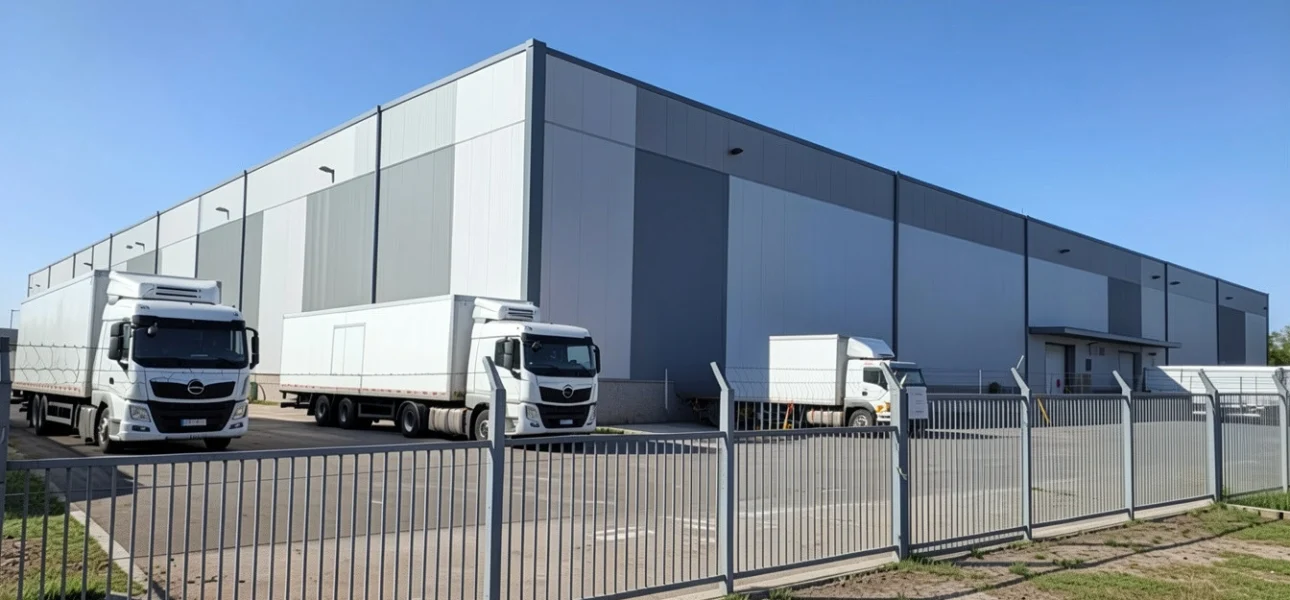
For decades, owning industrial or commercial real estate has been considered a sign of business success. Warehouses, manufacturing facilities, distribution centres, and commercial properties provide operational certainty while building long-term value on the balance sheet.
However, today’s business environment is changing.
Industrial companies across the Netherlands are investing in automation, sustainability, digitalisation, larger distribution facilities, and supply chain optimisation. These investments require significant capital, leading many business owners and CFOs to ask a different question:
Is owning our property creating the highest value for our business today?
This is where a Sale & Leaseback becomes a strategic consideration , not because ownership is no longer valuable, but because businesses periodically need to reassess whether their capital is working in the most effective way.
As an experienced real estate investment firm, RENEW Real Estate (RRE) works with industrial, logistics, and commercial property owners across the Netherlands to structure acquisitions, Sale & Leaseback solutions, industrial developments, and built-to-suit projects that align property decisions with long-term business objectives.
The answer isn’t whether every business should pursue a Sale & Leaseback.
The real question is:
When does it make financial sense?Financial Sense Isn’t Just About Raising Capital
One of the biggest misconceptions surrounding Sale & Leaseback transactions is that they’re only suitable for businesses looking to solve immediate funding challenges.
In reality, many of the most successful transactions are completed by financially healthy companies.
Rather than addressing short-term liquidity needs, these businesses are focused on improving capital efficiency, strengthening their competitive position, and ensuring their assets actively contribute to future growth.
The objective shifts from simply owning property to asking:
“Is this asset generating the best possible return for our business?”
Sign 1: When Your Property Has Become Your Largest Idle Investment
Every industrial property has value.
The question is whether that value is actively supporting the business.
Many warehouses and manufacturing facilities appreciate significantly over time, creating substantial equity.
However, unless that equity contributes towards strategic priorities, it remains largely dormant.
Businesses increasingly evaluate whether the capital tied up in property could generate greater returns if redirected towards initiatives such as:
- Expanding production capacity
- Investing in warehouse automation
- Accelerating sustainability programmes
- Strengthening working capital
- Funding acquisitions
- Entering new markets
Sometimes, the greatest opportunity isn’t buying another asset, it’s making better use of the one you already own.
Sign 2: When Capital Allocation Becomes More Important Than Property Ownership
Owning property offers stability.
But every business must periodically review whether ownership remains the most efficient use of capital.
This is particularly relevant for companies operating in sectors where investment cycles are accelerating.
Instead of asking,
“Should we own this building?”
many leadership teams now ask,
“Where will our next €10 million create the greatest return?”
If the answer lies in expanding the business rather than increasing property ownership, a Sale & Leaseback deserves consideration.
Sign 3: When Business Opportunities Can’t Wait
Opportunities rarely arrive at convenient moments.
A competitor becomes available for acquisition.
A major customer requires additional capacity.
Automation becomes commercially viable.
A new logistics corridor opens.
The businesses that respond fastest often gain the greatest competitive advantage.
Maintaining financial agility enables companies to move with confidence rather than delaying decisions while arranging traditional funding.
Sign 4: When Market Conditions Create New Opportunities
Industrial and logistics real estate across the Netherlands continues to attract strong investor interest due to its strategic importance within European supply chains.
For property owners, favourable market conditions may create opportunities to realise value while continuing to occupy the same premises.
Rather than viewing the transaction as selling a building, businesses increasingly see it as repositioning capital to support future priorities.
Timing, therefore, becomes just as important as valuation.
Sign 5: When Your Business Strategy Has Changed
Real estate decisions shouldn’t remain static while businesses continue to evolve.
Perhaps your company has:
- Expanded into new markets
- Introduced advanced manufacturing technologies
- Increased automation
- Adopted ESG objectives
- Shifted towards omni-channel distribution
- Experienced rapid revenue growth
If your business strategy has changed, your property strategy should be reviewed alongside it.
Sign 6: When You’re Planning for the Next Generation
For many privately owned and family businesses, succession planning extends beyond leadership.
It also involves reviewing how property assets will support future ownership structures, investment priorities, and long-term financial resilience.
A Sale & Leaseback can become one element of a broader transition strategy, creating liquidity while allowing operational continuity.
Questions Every Business Owner Should Ask
Rather than asking whether a Sale & Leaseback is right, consider asking:
- Is too much of our capital concentrated in real estate?
- Could this property contribute more to our long-term strategy?
- Are we planning significant investments over the next three to five years?
- Would greater financial flexibility improve decision-making?
- Does our property strategy still reflect where our business is heading?
- Are we evaluating property as an operational asset or as a strategic financial asset?
These questions often provide greater clarity than focusing solely on transaction structures.
A Strategic Property Partner, Not Just an Investment Company
Every business has different ambitions, which is why every property decision should begin with understanding those ambitions.
At RENEW Real Estate (RRE), conversations begin with the business, not the building.
As a specialist real estate investment company operating across the Netherlands, RRE works alongside industrial, logistics, and commercial property owners to understand their operational plans, capital requirements, occupancy needs, and long-term objectives before recommending a solution.
Whether the right approach involves a Sale & Leaseback, a strategic property acquisition, an industrial development, or a built-to-suit facility, the objective remains the same:
Creating long-term value through intelligent real estate decisions.
Frequently Asked Questions
Is a Sale & Leaseback only about raising cash?
No. Many businesses use Sale & Leaseback as a strategic capital allocation tool rather than simply a financing solution. It allows companies to redeploy capital into areas that may generate stronger business returns.
Is this relevant for logistics and industrial companies?
Yes. Industrial facilities, logistics warehouses, manufacturing plants, distribution centres, and commercial properties often represent significant capital investments, making them well suited for strategic property reviews.
Does the business need to relocate?
No. Businesses continue operating from the same premises under a long-term lease, ensuring continuity for employees, customers, and operations.
How do I know if now is the right time?
The best time to evaluate a Sale & Leaseback is before capital becomes urgent. Reviewing your options early gives you more flexibility and allows decisions to be driven by strategy rather than necessity.
When does a Sale & Leaseback make financial sense?
Usually, it’s when the conversation shifts from “How much is our property worth?” to “How much more could our business achieve if that value was working elsewhere?”
For industrial, logistics, and commercial property owners across the Netherlands, a Sale & Leaseback is not simply a transaction, it is a strategic tool for improving capital allocation, supporting long-term investment, and strengthening business resilience.
As a trusted real estate investment firm, RENEW Real Estate (RRE) helps businesses evaluate these opportunities through tailored acquisitions, Sale & Leaseback solutions, industrial developments, and built-to-suit projects. By aligning property strategy with business strategy, RRE enables companies to unlock the full potential of one of their most valuable assets, not just for today, but for the future.