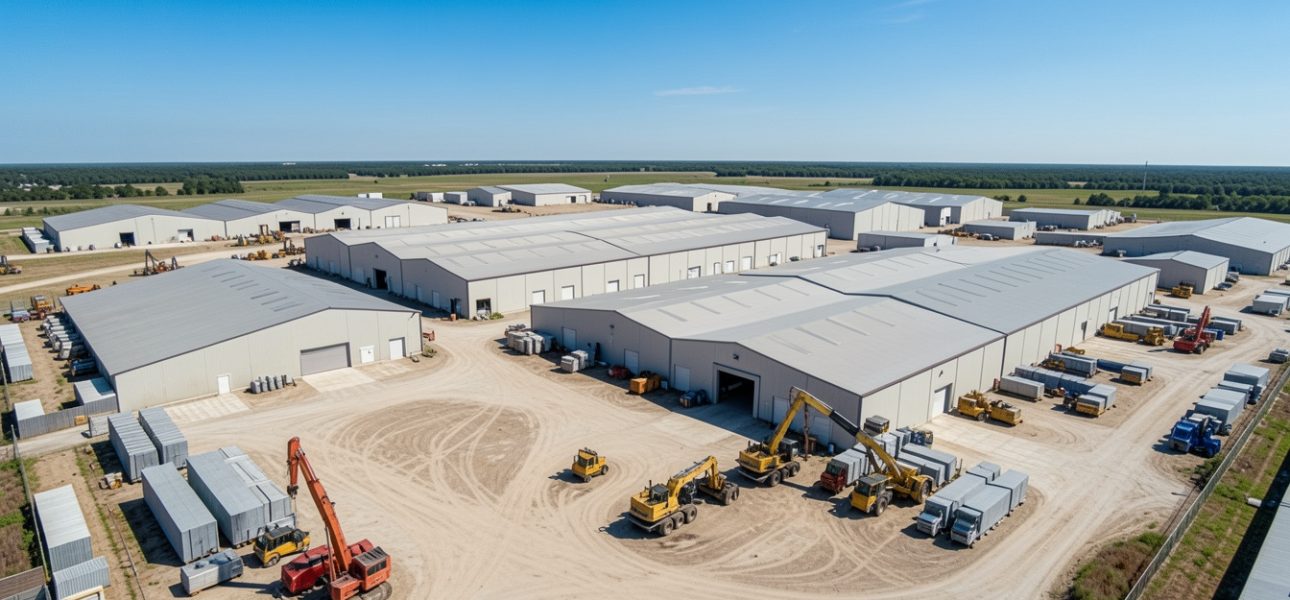
Across the Netherlands and wider Europe, industrial and logistics real estate is no longer viewed simply as operational infrastructure, it has become a strategic financial asset.
Manufacturers, logistics providers, wholesalers, retailers, and owner-occupiers are increasingly reassessing whether owning industrial property remains the best use of capital. Rather than keeping millions of euros tied up in warehouses, fulfilment centres, and distribution hubs, many businesses are choosing sale & leaseback transactions to unlock liquidity while maintaining complete operational continuity.
However, not every industrial property attracts the same level of investor interest.
The difference between an average transaction and an exceptional one often comes down to preparation.
Whether your objective is funding business expansion, warehouse automation, sustainability upgrades, acquisitions, or balance sheet optimisation, preparing your logistics property before entering the market can significantly improve valuation, investor confidence, and transaction certainty.
Why Preparation Matters More Than Ever
The European logistics real estate market continues to evolve rapidly.
Growing e-commerce demand, nearshoring, supply-chain diversification, geopolitical uncertainty, and increasing ESG regulations have fundamentally changed what investors look for in industrial assets. While occupier demand for quality logistics facilities remains resilient, investors have become increasingly selective, prioritising future-proof, well-located, sustainable assets with strong operational relevance.
Today’s investors are no longer buying warehouses alone.
They are investing in long-term operational resilience.
For owners considering a sale and leaseback , this means preparation has become a strategic value driver.
1. Understand Your Property’s Investment Story
Every successful sale-leaseback begins with understanding why your property matters.
Investors evaluate far more than square metres or replacement cost.
They assess questions such as:
- Is the facility mission-critical to the occupier?
- Does the location support long-term logistics demand?
- Is the warehouse positioned within Europe’s major distribution corridors?
- Can the asset remain competitive over the next 15-20 years?
Properties located near key logistics hubs such as Rotterdam, Moerdijk, Tilburg, Venlo, Schiphol, Eindhoven and major multimodal transport corridors generally benefit from stronger institutional demand because of their strategic connectivity and limited land availability. These characteristics often translate into greater pricing resilience and long-term investor appeal.
2. Strengthen ESG Credentials Before Marketing
Environmental performance has become one of the most influential drivers of industrial property valuations.
Across Europe, regulations surrounding energy efficiency, carbon emissions and corporate sustainability reporting continue to tighten.
Investors increasingly favour logistics assets that demonstrate:
- Strong EPC ratings
- Energy-efficient building systems
- Solar installations
- LED lighting
- Electric vehicle charging infrastructure
- BREEAM or equivalent sustainability certifications
- Future-ready energy capacity
Buildings requiring substantial capital expenditure to meet future regulations often experience pricing discounts.
Improving ESG performance before launching a sale and leaseback can therefore enhance both investor competition and long-term lease attractiveness.
3. Optimise Lease Structure
A sale & leaseback is fundamentally an investment in predictable income.
Consequently, investors closely evaluate lease quality.
Key considerations include:
- Appropriate lease length
- Rent review mechanisms
- Repair and maintenance responsibilities
- Triple-net lease structures where appropriate
- Options for expansion or flexibility
- Operational continuity
A well-structured lease not only protects the occupier but also increases investment value by providing long-term income certainty.
This is where experienced structuring becomes essential.
4. Demonstrate Operational Importance
One of the strongest valuation drivers is demonstrating that the property plays a critical role within the occupier’s supply chain.
Mission-critical logistics facilities generally command stronger investor interest because relocation risk is significantly lower.
This includes:
- National distribution centres
- Regional fulfilment hubs
- Manufacturing facilities
- Cold storage operations
- High-throughput warehouses
- Industrial outdoor storage (IOS)
The stronger the operational dependency, the more attractive the investment becomes.
5. Invest in Future-Ready Logistics Infrastructure
Warehouse automation continues to reshape European logistics.
Automation technologies including robotics, AI-driven warehouse management systems and automated storage solutions are becoming increasingly common across industrial operations.
Investors recognise that businesses making long-term automation investments are less likely to relocate, creating greater income security.
Preparing facilities for automation or demonstrating automation readiness can significantly strengthen investment appeal during a sale-leaseback process.
6. Prepare Complete Technical and Legal Documentation
Transaction efficiency often depends on documentation readiness.
Before approaching investors, owners should organise:
- Title documentation
- Environmental reports
- Building surveys
- Maintenance history
- Planning permissions
- Floor plans
- Lease documentation
- Energy certificates
- Compliance records
Well-prepared information reduces transaction risk, accelerates due diligence, and builds investor confidence.
7. Align the Sale with Your Business Strategy
A successful sale & leaseback should never be viewed as simply selling property.
It should support broader business objectives.
Across Europe, companies increasingly use sale and leaseback proceeds to:
- Expand logistics networks
- Invest in automation
- Modernise facilities
- Reduce debt
- Improve liquidity
- Fund acquisitions
- Accelerate sustainability initiatives
- Support business growth
Rather than locking capital inside real estate, businesses are reallocating resources toward activities that generate higher operational returns.
Why the Netherlands Continues to Lead Sale & Leaseback Activity
Few European markets are as well positioned for industrial sale & leaseback transactions as the Netherlands. Its central location, world-class infrastructure, strong institutional investor base, limited logistics land availability, and role as a gateway to European markets continue to attract domestic and international capital.
At the same time, occupiers face increasing pressure to modernise assets, improve sustainability performance, and optimise capital allocation. These trends continue to reinforce the attractiveness of well-prepared logistics and industrial assets.
RENEW Real Estate as a Strategic Partner
Preparing an industrial property for a sale & leaseback requires far more than marketing a building.
It requires strategic positioning, financial structuring, investor insight, and a deep understanding of logistics operations. This is where RENEW Real Estate (RRE) delivers meaningful value.
Unlike traditional intermediaries, RRE acts as a strategic partner in logistics and industrial real estate across the Netherlands and Europe. Because RRE invests directly, decisions can be made with speed, certainty, and a long-term partnership mindset helping occupiers unlock capital while continuing to operate from the facilities that power their business.
Industrial real estate is no longer just a place to operate, it is a source of strategic capital. As the European logistics market continues to evolve, businesses that proactively prepare their properties for sale & leaseback transactions place themselves in a stronger position to maximise value, attract institutional investment, and reinvest capital where it creates the greatest competitive advantage.
For owners and occupiers across the Netherlands and Europe, success begins long before the transaction itself. It begins with preparation and with choosing the right strategic partner. Whether your objective is unlocking capital, strengthening your balance sheet, funding warehouse automation, or future-proofing your logistics portfolio, RENEW Real Estate combines investment capability with deep logistics expertise to help transform industrial real estate into long-term business value.