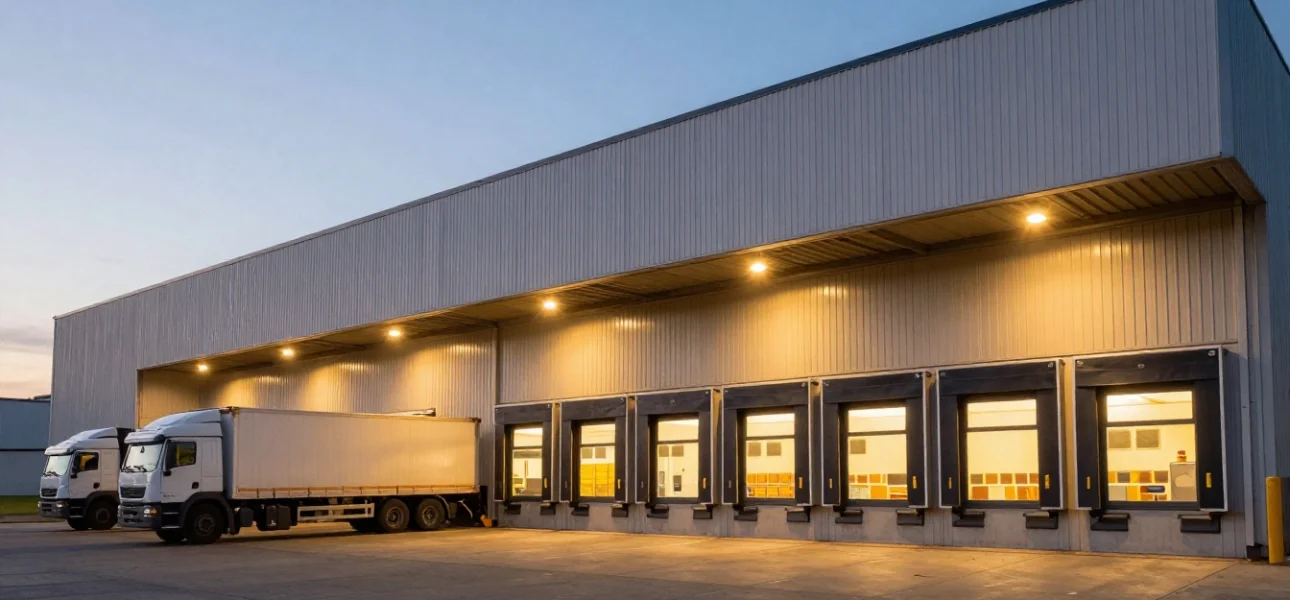
Across Europe’s logistics real estate landscape, ownership is no longer viewed as a default advantage. Instead, capital efficiency, flexibility, and balance-sheet optimisation are becoming decisive priorities. As a result, sale & leaseback has emerged as a preferred strategy for corporates looking to exit non-core logistics assets without disrupting operations.
In markets such as the Netherlands, where logistics real estate sits at the intersection of global trade, supply-chain resilience, and institutional capital, this trend is particularly pronounced. What was once considered a financing tool is now widely recognised as a strategic corporate real estate decision.
The Changing Role of Logistics Real Estate in Europe
Logistics real estate has been one of Europe’s strongest-performing property sectors over the past decade. E-commerce expansion, nearshoring, supply-chain diversification, and population-driven consumption have all fuelled sustained demand for warehouses, fulfilment centres, and distribution hubs.
The Netherlands plays a central role in this ecosystem. Its proximity to major European consumer markets, world-class ports such as Rotterdam, dense motorway networks, and multimodal infrastructure make it a natural logistics gateway for Europe. As a result, vacancy levels remain structurally low, land availability is constrained, and institutional demand for high-quality logistics assets remains strong.
However, as the sector matures, corporate occupiers are reassessing whether owning real estate truly supports their core business objectives.
What Are Non-Core Logistics Assets?
Non-core logistics assets typically include:
- Older distribution centres that still function operationally but no longer meet modern efficiency or ESG standards
- Strategically useful locations that are operationally necessary but not central to competitive differentiation
- Assets acquired historically when ownership was cheaper or financing was more accessible
- Properties where capital is locked into bricks and mortar rather than growth initiatives
For many logistics operators, manufacturers, wholesalers, and retailers, real estate is not the business, it is an enabler of the business. As capital markets tighten and operational complexity increases, that distinction is driving a reassessment of ownership models.
Why Sale & Leaseback Is Gaining Momentum
- Unlocking Trapped Capital at Full Market Value
- Automation and robotics
- Digital supply-chain optimisation
- Network expansion or consolidation
- Working capital and debt reduction
- Unlocking Trapped Capital at Full Market Value
- Long-term operational security
- Customised lease terms aligned with business needs
- Stability of location and continuity of service
- Portfolio Rationalisation and Focus on Core Operations
- Exit ownership without relocation
- Streamline asset-heavy balance sheets
- Improve return metrics and financial flexibility
- ESG Pressures and the Cost of Modernisation
- Shift responsibility for ESG upgrades to capital partners
- Occupy greener, future-proofed assets without upfront investment
- Align corporate sustainability goals with real estate strategy
For many occupiers, the return on invested capital generated by reinvesting proceeds far outweighs the perceived benefit of owning real estate.
At the same time, they transfer asset risk, capex exposure, and long-term obsolescence risk to investors who are structurally better positioned to manage it.
This approach is particularly relevant for pan-European operators managing diverse property portfolios across multiple jurisdictions.
Investors, in turn, are increasingly willing to fund upgrades, redevelopments, or brownfield transformations, especially in land-constrained markets like the Netherlands.
Investor Demand Is Reinforcing the Model
From an investor perspective, logistics sale & leaseback transactions offer a compelling combination of:
- Long, secure income streams
- Creditworthy tenants
- Assets in supply-constrained locations
- Inflation-linked rental structures
In the Netherlands and across Europe, institutional investors, pension funds, and specialist real estate managers are actively seeking income-producing logistics assets, particularly where leases are structured directly with the operating business.
This strong demand has helped make sale & leaseback a liquid, competitive, and efficient exit route for occupiers.Sale & Leaseback as Part of a Broader European Trend
The rise of sale & leaseback should be viewed within a larger context of corporate real estate recycling. Across Europe, companies are monetising owned assets to fund transformation, resilience, and growth.
At the same time, development strategies are evolving. Brownfield logistics sites are being repositioned into modern, energy-efficient facilities, often supported by institutional capital and long-term lease commitments from occupiers. Sale & leaseback frequently plays a role in these transitions, bridging old assets and future-ready infrastructure.
The Netherlands: A Natural Sale & Leaseback Market
Few markets are as structurally aligned with sale & leaseback as the Netherlands. Scarce land, strong tenant demand, mature capital markets, and deep investor appetite create ideal conditions for these transactions.
For occupiers, this means:- Attractive pricing
- Competitive investor processes
- Tailored lease structures
For investors, it offers access to stable income in one of Europe’s most strategically important logistics corridors.
How RENEW Real Estate Supports This Strategy
As sale & leaseback becomes a cornerstone of logistics real estate strategy, RENEW Real Estate (RRE) plays a pivotal role in connecting occupiers with long-term capital solutions.
RRE’s Property Investment Solutions
RRE focuses on:- Acquisitions of logistics and industrial assets aligned with structural demand
- Sale & Leaseback transactions that unlock capital while ensuring operational continuity
- Commercial developments that deliver modern, sustainable, future-proof logistics facilities
What Differentiates RRE
RRE’s approach is defined by:- Deep understanding of occupier operations and capital priorities
- Structuring flexibility rather than one-size-fits-all solutions
- Strong execution capability in the Netherlands and across Europe
- Alignment of investment strategy with long-term asset relevance and ESG readiness
By combining capital expertise with operational insight, RRE enables occupiers to exit non-core logistics assets without sacrificing control, certainty, or growth momentum.
Sale & leaseback has become far more than a financial transaction. In the Netherlands and across Europe, it is now a strategic instrument for companies seeking flexibility, liquidity, and focus in an increasingly complex logistics environment.
As ownership gives way to performance-driven real estate strategies, sale & leaseback will continue to shape how logistics assets are financed, developed, and operated. And with partners like RENEW Real Estate, occupiers gain not just capital, but a long-term, aligned investment partner for the next phase of their growth.