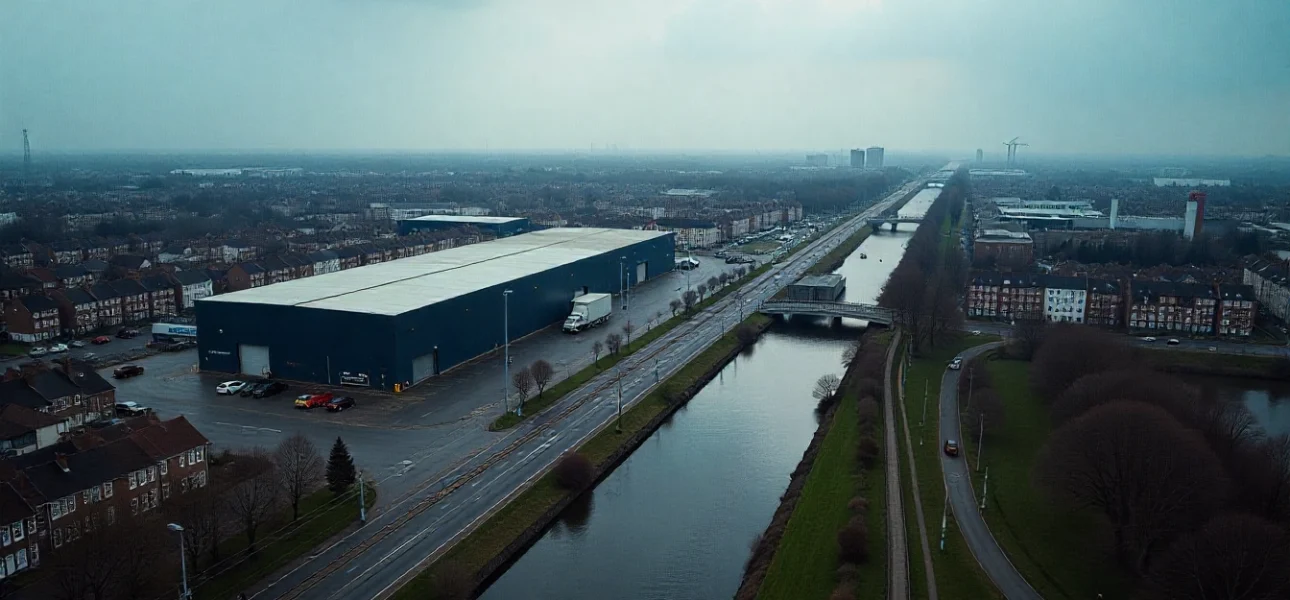
Cities across Europe are shrinking the distance between people, goods and services. That shift is creating acute demand for urban logistics – compact, well-located warehousing and fulfillment solutions that sit inside or beside dense population centres. In the Netherlands, the combination of strong e-commerce penetration, strict urban environmental rules, and severe land constraints is accelerating innovation: multi-storey and mixed-use warehouses, micro-fulfilment, and creative uses of brownfield sites are becoming mainstream parts of the logistics landscape.
Why urban logistics matters for the Dutch market
The Netherlands is Europe’s transport and distribution hub: dense population centres, major ports (Rotterdam), and superb inland connectivity make it a natural base for last-mile operations. E-commerce penetration in the Dutch retail mix is high and rising, pushing parcel volumes and intensifying demand for facilities close to consumers. That creates opportunities and constraints for occupiers and real estate owners alike. Investors and operators are now focused as much on proximity and speed as on unit size and rental yield.
Source: Landmark GlobalMixed-use warehousing is the practical response to density
Traditional single-storey “big box” logistics estates work well on cheap, peripheral land but densely populated regions don’t have that luxury. The Netherlands has seen a surge in multi-storey logistics, logistics hotels, and mixed-use schemes that combine warehousing with light industrial, office, retail, or even community uses. These vertically stacked solutions maximise land value per square metre and enable last-mile fulfilment nodes right where demand is. The OECD and other industry studies show multi-storey and mixed-use models are an increasingly viable answer to urban land scarcity.
Source: OECDExplore our Mixed-use warehousing projects: Bloemlaan & Capelle
What occupiers care about
For occupiers and retailers, third-party logistics (3PLs), manufacturers with urban distribution needs the priorities are clear:
- Proximity to customers to improve delivery speed and reduce costs
- Operational continuity so urban restrictions (curfews, emissions) don’t interrupt fulfilment
- Scalability: flexible space that can scale up or down as volumes fluctuate
Modern mixed-use warehouses answer these needs by combining modular floor plates, mezzanine picking, and integrated micro-fulfilment systems that support same-day and next-day services while minimising street-level disruption. Trends such as electrified fleets, cargo bikes, and consolidation centres also influence occupier choices.
Source: World Economic Forum Reports
What owners and investors are watching
Owners face a balancing act: converting or developing urban sites is capital-intensive and operationally complex, yet the scarcity of well-located urban logistics space supports premium rents and strong long-term demand. Large fund transactions and platform plays across Europe including notable activity in the Netherlands show institutional appetite remains strong for well-located logistics assets. Investors are increasingly segmenting portfolios: long-lease big boxes for income stability, and smaller, flexible urban assets (including multi-storey) for growth and strategic exposure. Recent large portfolio deals underscore that logistics assets remain a core strategic sector for institutional capital.
Source: Reuters
Policy and sustainability are shaping design choices
Dutch cities are moving toward low-emission zones and stricter urban planning to reduce pollution and improve quality of life. These policy drivers force developers and occupiers to rethink vehicle fleets, loading regimes and building services. As municipalities set zero-emission targets and reconfigure kerbside usage, urban warehouses are being designed to prioritise electric charging infrastructure, quieter loading solutions, and operational windows that reduce peak congestion. Developers who integrate sustainability from energy efficiency to last-mile electrification are finding smoother permitting processes and stronger tenant interest.
Technology and operational models that matter
Several operational models dominate the conversation:
- Micro-fulfilment centres (MFCs): small, automated hubs close to customers that reduce delivery miles and speed order fulfilment
- Consolidation and cross-dock centres: combining multiple inbound flows and enabling efficient last-mile dispatches
- Shared-use and on-demand warehousing: flexible space rented by the pallet or hour to smooth peaks
These models often supported by robotics, warehouse management systems and predictive routing make dense, urban fulfillment economically viable despite higher rents and more complex building rules. Industry studies and case examples point to a steady rise in MFCs and multimodal urban logistics pilots across Netherlands cities.
Source: World Economic Forum Reports
Risks and trade-offs
Mixed-use and multi-storey logistics solve land scarcity, but bring new risks:
- Higher capex and construction complexity (fire safety, heavy load floors, ramps or lifts)
- Operational constraints: navigating municipal rules and community expectations about noise and traffic
- Technological integration costs: automation and MFC hardware add upfront investment. Owners and occupiers must price those trade-offs into leases, service arrangements, and capital planning and sometimes reimagine traditional lease models to split build costs and operational risk more effectively
How sale & leaseback and capital solutions fit in
For occupiers holding strategic logistics sites that could unlock capital, sale & leaseback is an increasingly used mechanism to monetise real estate while retaining operational control. By converting fixed property into liquid capital, occupiers can fund expansion, invest in automation, or redeploy resources for core business needs without relocating critical urban fulfilment capacity. On the investor side, well-located urban logistics assets with long leases and strong occupiers remain attractive. The combination of last-mile demand, sustainability imperatives, and scarcity in Dutch urban markets sustains investor interest in these asset types.
Source: Landmark Global
Practical takeaways for the Dutch audience
- Occupiers should prioritise sites with multimodal access (public transport, river/road links for redistribution) and design flexibility for future automation
- Owners should evaluate mixed-use conversions and multi-storey builds as a route to capture urban rents and diversify income streams
-
Local authorities and planners should treat urban logistics as a public-private challenge: coordinated curb management, charging infrastructure, and integrated land-use policy unlock better outcomes for citizens and businesses
These aligned actions will keep Dutch cities competitive as European e-commerce and urban population density grow.
The European context and outlook
Across Europe, the same drivers of e-commerce growth, decarbonisation targets, and land scarcity are pushing urban logistics innovation. Institutional capital remains active (large deals and platform strategies continue), and technology players are refining last-mile cost structures with electrification and micro-fulfilment. For the Netherlands, the advantage is clear: location, logistics know-how, and strong demand underpin a resilient outlook for mixed-use and urban logistics assets.
Source: Financial Times
RENEW Real Estate (RRE) provides property investment solutions focused on industrial and logistics real assets. In the Netherlands market, RRE deploys funding through sale & leaseback transactions, acquisitions, and development projects enabling occupiers and owners to realise liquidity and institutional investors to access well-located logistics inventory. RRE positions itself as a transaction partner providing capital and market access, not as an advisor. If you’re evaluating urban logistics options in densely populated regions, RRE can support execution through direct investment and structured transaction solutions.