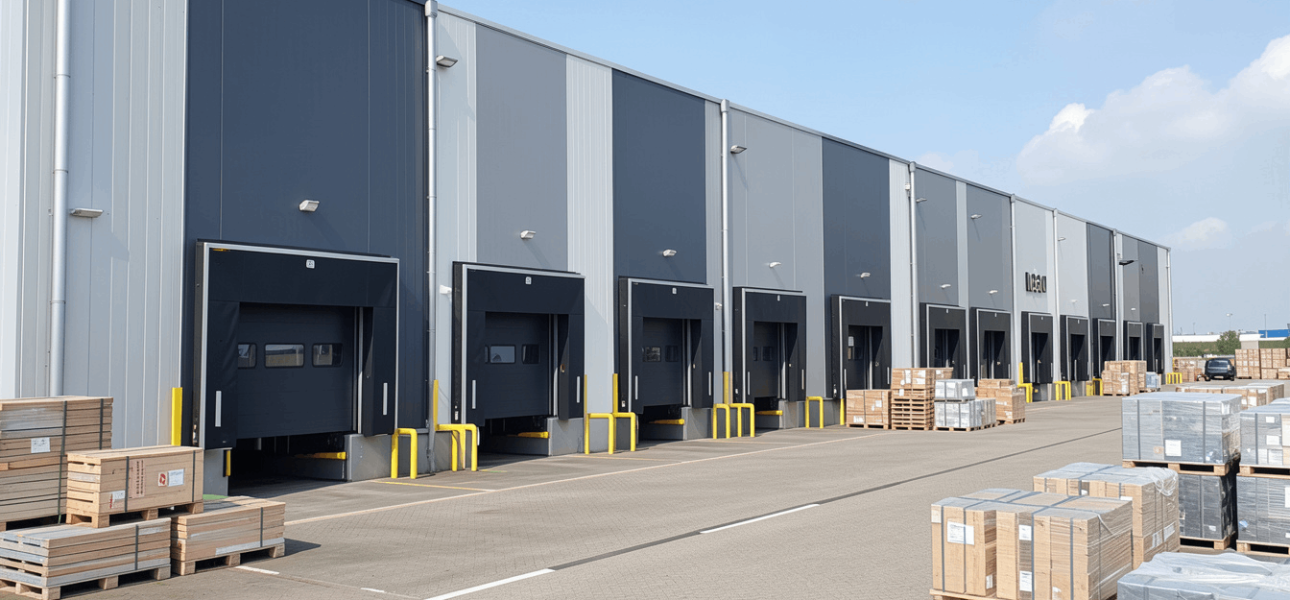
For industrial occupiers, logistics operators, and property owners, this shift presents new opportunities, particularly through sale-leaseback transactions, redevelopment of existing sites, and the development of modern logistics facilities tailored to operational needs.
In a market where logistics space remains scarce and demand continues to evolve, companies are increasingly reassessing how their real estate supports long-term business growth.
Why Logistics Space in the Netherlands Remains Strategically Important
The Netherlands continues to be one of Europe’s most critical logistics hubs.
Its central location within Europe allows companies to reach over 170 million consumers within a day’s drive, making the country a preferred base for European distribution networks.
The presence of the Port of Rotterdam, Europe’s largest seaport, combined with excellent road, rail, and inland shipping infrastructure, creates a powerful logistics ecosystem that supports global trade flows.
For logistics operators, manufacturers, and distributors, locating operations in the Netherlands enables efficient access to key markets including Germany, Belgium, France, and Central Europe.
This strategic advantage continues to drive strong demand for logistics space across the country.
From Passive Ownership to Strategic Real Estate Decisions
Many companies across Europe still own the industrial or logistics properties they operate from.
While ownership can provide stability, it can also tie up significant capital that could otherwise be invested into business growth, innovation, or expansion.
At the same time, many of these facilities were developed years ago and may no longer meet modern logistics requirements such as:
- higher clear heights for automated storage systems
- larger yard space for modern truck movements
- energy-efficient building systems
- capacity for solar installations and electrified fleets
- optimized layouts for high-throughput distribution
As a result, companies are increasingly evaluating their real estate portfolios from a strategic perspective rather than simply an operational necessity.
This is where value-add logistics strategies come into play.
Unlocking Capital While Maintaining Operations
One of the most effective strategies for companies that own their logistics or industrial facilities is a sale-leaseback transaction.
Through a sale-leaseback structure, a company sells its property to a real estate investor while simultaneously leasing the building back for long-term operational use.
This approach allows occupiers to:
- unlock capital tied up in real estate
- reinvest funds into core business operations
- maintain operational continuity
- upgrade or redevelop facilities where needed
- improve balance sheet flexibility
Across Europe, sale-leaseback transactions have become increasingly popular among manufacturers, logistics operators, wholesalers, and e-commerce companies looking to optimize their real estate strategies.
In markets such as the Netherlands, where logistics land is limited and property values remain strong, sale-leasebacks can provide an attractive solution for both occupiers and investors.Redevelopment and Expansion Opportunities for Industrial Sites
Beyond sale-leasebacks, another growing opportunity lies in the redevelopment of existing industrial and logistics sites.
Many properties located in established logistics corridors have strong fundamentals – excellent infrastructure connectivity, access to labour, and proximity to major supply routes.
However, the buildings themselves may be outdated.
Redevelopment can transform these sites into modern logistics facilities capable of supporting automation, sustainability targets, and new operational requirements.
Typical value-add development strategies include:
- expanding warehouse footprints
- increasing building height and storage capacity
- upgrading energy systems and sustainability performance
- improving yard layouts for truck efficiency
- converting older industrial buildings into modern distribution facilities
For companies operating from older facilities, partnering with a developer or real estate investor can unlock the potential of these sites without disrupting operations.
The Key Trends Driving Modern Logistics Real Estate
Several structural trends are shaping logistics space requirements across Europe.
E-commerce and Omni-Channel Distribution
The continued growth of e-commerce has transformed logistics networks.
Companies now require facilities that support high-throughput order fulfilment, advanced inventory management, and rapid delivery capabilities.
Modern distribution centres increasingly include automation technologies, robotics systems, and specialized fulfilment infrastructure.
Supply Chain Resilience and Regional Distribution
In recent years, businesses have become more focused on supply chain resilience and flexibility.
Rather than relying solely on centralized mega-warehouses, many companies are adopting multi-node distribution networks that improve service levels and reduce supply chain risks.
The Netherlands plays a critical role in these networks due to its connectivity to major European markets.
Sustainability and Energy Efficiency
Sustainability has become a key driver in logistics real estate decisions.
Occupiers are increasingly seeking buildings that support:
- solar energy generation
- energy-efficient operations
- electrified transport fleets
- compliance with ESG regulations
For many older logistics properties, upgrades are required to meet these standards creating opportunities for redevelopment and repositioning.
A Logistics Landscape Shaped by Strategic Locations
Across the Netherlands, logistics activity is concentrated in regions that benefit from strong infrastructure, proximity to major ports, and efficient connections to key European markets. These locations form the backbone of the country’s distribution network and continue to attract companies looking to optimise their supply chains.
Regions such as North Brabant have developed into major logistics hubs due to their central position between the Netherlands, Belgium, and Germany, supporting large-scale distribution across the Benelux and wider Europe. Limburghas also grown in importance as a cross-border logistics location with strong connectivity to Germany’s industrial regions and access to Central European markets.
Meanwhile, the province of South Holland, supported by the Port of Rotterdam, plays a vital role in international trade and the distribution of goods entering Europe. In the more densely populated western parts of the country, particularly within the Randstad metropolitan area, growing consumer demand and e-commerce activity are further driving the need for well-located distribution facilities.
Together, these regions create a highly interconnected logistics landscape that reinforces the Netherlands’ position as one of Europe’s most important distribution gateways.How RENEW Real Estate Supports Occupiers and Property Owners
As the logistics market evolves, many occupiers and property owners are seeking experienced partners to help unlock the value of their real estate assets.
RENEW Real Estate (RRE) works closely with companies across the Netherlands to structure solutions such as:
- sale-leaseback transactions for owner-occupied industrial properties
- logistics development partnerships for new facilities
- redevelopment of existing industrial sites
- build-to-suit logistics projects tailored to operational needs
By combining local market knowledge with logistics real estate expertise, RRE helps occupiers and owners unlock capital, optimize operational facilities, and create long-term real estate value.
A New Phase for Logistics Real Estate
The logistics real estate market in the Netherlands is no longer just about acquiring prime warehouses.
Instead, the focus is shifting toward strategic real estate solutions that support operational efficiency, sustainability, and capital optimization.
For occupiers and property owners, this shift creates new possibilities from sale-leaseback transactions to redevelopment of existing sites and the development of next-generation logistics facilities.
As logistics networks across Europe continue to evolve, companies that proactively rethink their real estate strategies will be best positioned to support long-term growth.