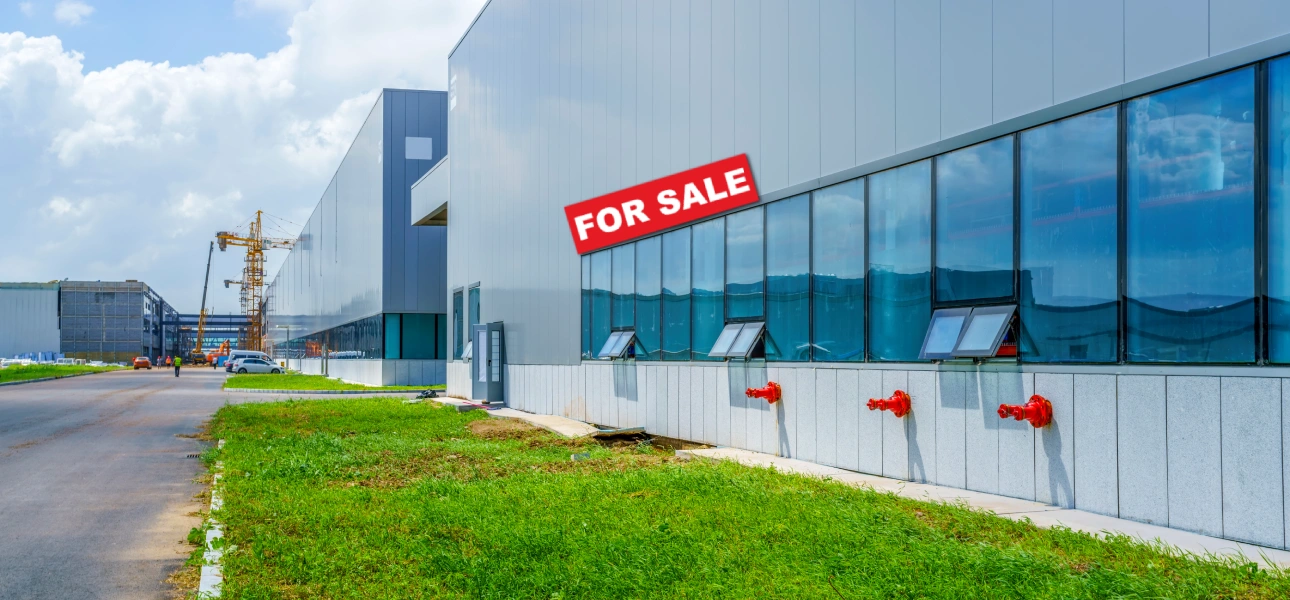
Sale & leaseback began as a straightforward financing technique: an owner-occupier sells an asset (often industrial or retail property) to an investor, then immediately leases it back to remain operating in the same location. Today, however, Sale & Leaseback has matured into a strategic instrument that businesses and investors use to accelerate growth, optimize portfolios, meet ESG goals and unlock value from land-constrained markets and the Netherlands is a prime place to see this transformation in action.
Why Sale & Leaseback Is Moving From Lifeline To Long-Game Strategy
Historically Sale & Leaseback addressed two needs:
(1) immediate liquidity for cash-hungry corporates
(2) long-term, income-producing assets for institutional buyers.
But macro shifts over the last five years rising capital costs, tighter development pipelines in prime logistics corridors, ESG priorities, and greater focus on balance-sheet efficiency have made Sale & Leaseback far more versatile:
- Capital recycling for growth: Corporates now use proceeds to fund expansion, pay down expensive debt, invest in automation or green upgrades, not just to close a short-term cash gap
- Portfolio optimisation: Businesses carve out non-core real estate while preserving operational continuity via long-term leases; investors obtain institutional-grade, income-producing assets with predictable cash flows
- Operational and strategic flexibility: Structured leases, partial Sale & Leaseback (sale of part of an estate) and build-to-suit sale-leasebacks allow occupiers to retain strategic control while shifting capital to higher-return initiatives
- Sustainability & redevelopment plays: Sale & Leaseback is being paired with brownfield conversions and modernisation projects, enabling occupiers to fund energy-efficient upgrades or move into higher-value, sustainable logistics footprints These are global trends, and they map directly to current forces shaping Dutch real estate markets.
Why The Netherlands Is Fertile Ground For Strategic Sale & Leaseback
A few Dutch market characteristics make Sale & Leaseback especially attractive today:
- Logistics scarcity and strong fundamentals: The Netherlands remains a European logistics hub with persistent demand in prime locations (Rotterdam/Amsterdam corridors, Eindhoven, Tilburg). Tight land supply and high quality standards push occupiers to monetise existing assets instead of seeking raw land. Recent market reports show a rebound in logistics investment volumes and an ongoing appetite for well-located logistics assets
- Investor appetite for stable, long-leased assets: Institutional and private capital are actively seeking long-income real estate in Europe; sale-and-leaseback structures deliver that security while offering occupiers a capital solution. Industry snapshots and EMEA logistics commentary note renewed momentum for Sale & Leaseback as occupiers look to unlock capital
- Active, local precedent and successful transactions: The Netherlands has seen notable Sale & Leaseback deals across sectors: industrial/logistics and healthcare among them demonstrating practical use cases for the structure. Case studies show Sale & Leaseback being used to support sector-specific challenges (e.g., healthcare operators stabilising finances while ensuring continuity)
- Regulatory & accounting considerations are well understood but impactful: Accounting rules such as IFRS 16 affect how Sale & Leaseback is recorded and influence structuring choices; corporates and investors therefore design transactions mindful of regulatory and balance-sheet effects
Practical Ways Occupiers Are Using Sale & Leaseback As A Growth Lever
Below are how Netherlands-based (and Europe-facing) occupiers are converting sale & leaseback into strategic outcomes:
- Fund capex and automation: Manufacturers and logistics operators monetise property to invest in robotics, automation, or last-mile fulfilment hubs. Sale proceeds are a non-dilutive funding source for operational transformation
- Accelerate green upgrades: Energy retrofits, solar, and sustainability certifications can be funded through Sale & Leaseback structures or via hybrid deals (sale proceeds ring-fenced for capex), helping occupiers meet ESG targets without new debt
- De-risk and simplify balance sheets: By converting fixed asset exposure into lease obligations, companies can make their balance sheets more flexible and redeploy capital to core activities. Well-structured lease terms and leaseback durations are tailored to match the occupier’s operational plans
- Enable brownfield-to-prime transitions: In a land-constrained market, occupiers use Sale & Leaseback to fund relocation into modern, efficient facilities sometimes in combination with brownfield redevelopment strategies that institutional investors favour
>> Explore RRE’s Sale & Leaseback Projects
How Investors And Capital Providers Are Responding
Investors view Sale & Leaseback as a way to secure long-term, predictable cash flows with the upside of asset re-capitalisation or redevelopment. That has led to:
- Dedicated Sale & Leaseback funds and pipelines targeting logistics, healthcare and niche industrial sectors
- Structuring diversity: staggered lease lengths, indexation clauses, capex responsibilities, and options to co-invest in redevelopment
- Due diligence intensity: investor underwriting is now deeper assessing tenant credit, underlying market fundamentals, and ESG remediation costs. Recent market reports highlight a tightening of bid-ask spreads as capital re-aligns on these asset types
Risks, Structuring Considerations And Best Practices
Sale & Leaseback is powerful but it must be structured appropriately:
- Accounting & tax: Apply IFRS 16 and local tax implications early in deal design; accounting treatment can materially affect reported leverage and profit/loss
- Lease terms & tenant credit: Long leases improve investor appetite but must be balanced against occupier flexibility; break options, renewal rights and rent indexation need careful negotiation
- Capex obligations: Clarify who funds and executes building upgrades, green retrofits, or redevelopment mismatch here can create disputes later
- Market timing & valuation: Sellers should benchmark values; in a market where prime yields and pricing oscillate, timing affects proceeds and the cost of future occupation. Reports from the Netherlands show a recovering but still vigilant investment climate
Why This Matters In Practice
- Industrial Sale & Leaseback in the Netherlands: Recent transactions (industrial sale/leasebacks) show occupiers tapping asset value to scale operations and modernise facilities, concrete examples include completed industrial Sale & Leaseback deals that freed up capital for operational investment
- Healthcare operator solution: A Dutch healthcare provider used Sale & Leaseback to stabilise finances while ensuring uninterrupted patient services demonstrating sector-specific suitability for social or healthcare investors
Where Sale & Leaseback sits in the next 3-5 years
- Normalisation and sophistication: Expect Sale & Leaseback to move from opportunistic to programmatic for many occupiers (repeatable capital-release programmes). Industry outlooks anticipate additional waves of Sale & Leaseback as occupiers balance capital needs and investors chase secure income streams
- Integration with sustainability and redevelopment: Sale & Leaseback will increasingly sit at the centre of brownfield conversions and sustainability upgrades, investors will favour assets with a credible green plan and occupiers will use proceeds to meet regulatory and customer expectations
Strategic Sale & Leaseback, Not Just Financing, But A Growth Enabler
Sale & leaseback in the Netherlands has evolved beyond a balance-sheet shortcut. It’s now a strategic lever that unlocks capital for growth, funds sustainability upgrades, supports redevelopment in land-constrained logistics corridors, and aligns corporate strategy with investor demand for stable, long-term income. When designed well, taking account of accounting rules, tenant-credit strength, capex responsibilities and market dynamics, Sale & Leaseback is a sophisticated tool for both occupiers and capital providers.
RENEW Real Estate provides property investment solutions into real estate and property investments across the Netherlands and broader markets. RRE’s activity spans acquisitions, sale & leasebacks, developments (non-residential), and other property investments helping to deploy smart capital into assets that benefit from these structural trends in logistics, industrial and specialist sectors. For organisations looking to convert real estate into strategic capital or to partner on institutional-grade opportunities, RRE offers investment capability and market execution across those areas.
Sources: CBRE, KnightFrank, Colliers, KPMG, CBREIM, Savills, PWC, Ascension Advisory