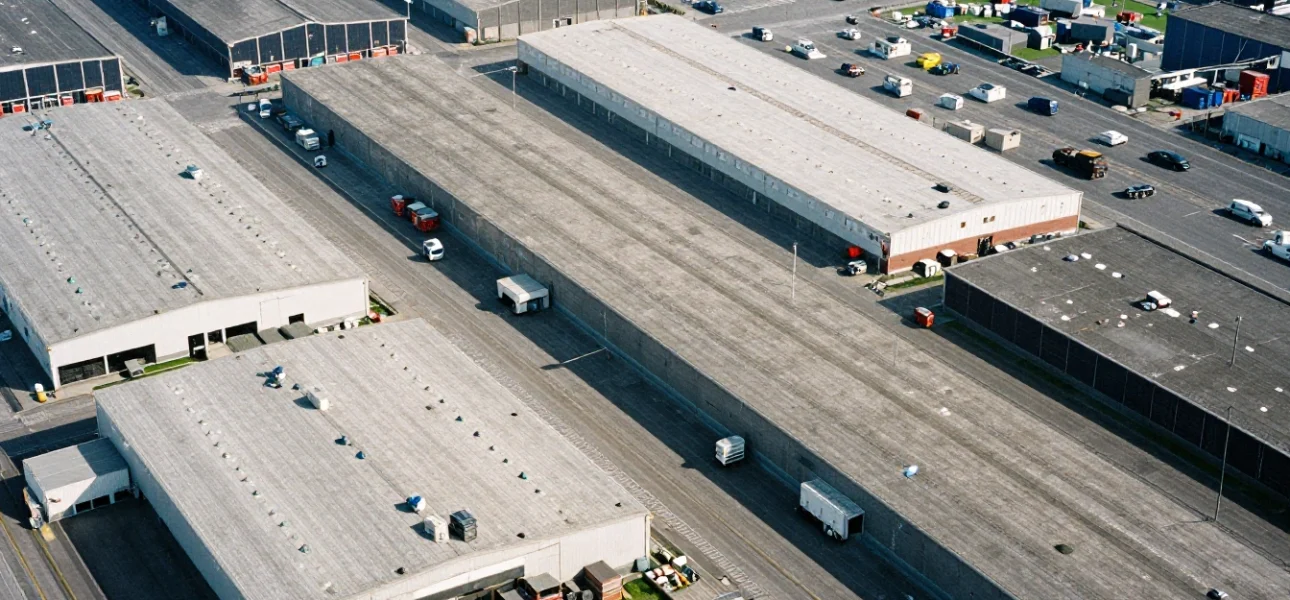
The Netherlands has long been one of Europe’s most important logistics hubs, underpinned by world-class ports, airports, inland waterways, and road networks, as well as a highly efficient and transparent real estate market. Its central location within Europe, combined with advanced infrastructure and a strong trade-driven economy, has made the country a natural gateway for continental and global supply chains.
As logistics operations continue to evolve driven by automation, sustainability targets, digitalisation, and the rapid electrification of fleets and facilities, the country’s electricity infrastructure is entering a necessary phase of adaptation. Growing energy demand from modern warehouses and distribution centres is prompting a broader rethink of how logistics real estate is planned, designed, and future-proofed.
What is commonly referred to as grid congestion is therefore increasingly being viewed not as a structural obstacle, but as a catalyst for smarter, more forward-looking logistics real estate decisions. For occupiers, developers, and investors across the Netherlands and wider Europe, this shift is accelerating innovation in warehouse design, on-site energy solutions, and strategic site selection ultimately strengthening the resilience, sustainability, and long-term value of logistics assets.
A Changing Energy Landscape for Logistics Real Estate
Logistics facilities today are more advanced and energy-intensive than ever before. Automated material handling, temperature-controlled storage, digital infrastructure, and electric vehicle fleets have all increased power requirements. At the same time, Europe’s push toward decarbonisation is encouraging electrification across supply chains.
In the Netherlands, where logistics density is among the highest in Europe, this transition is prompting a reassessment of how and where logistics real estate is developed. Rather than slowing growth, it is leading to more intentional planning, aligning real estate strategy with long-term energy availability and sustainability goals.
Grid Awareness as a Site Selection Advantage
Energy availability is now becoming an integral part of site selection, alongside traditional factors such as transport connectivity, labour access, and proximity to consumers.
For logistics occupiers, this shift is creating several positive outcomes:
- More balanced geographic distribution of logistics activity beyond traditional hotspots
- Increased interest in emerging logistics corridors and regional hubs Greater collaboration between occupiers, developers, and municipalities
- By factoring grid readiness into location decisions early, occupiers can reduce operational risk while securing assets that remain viable and competitive over the long term.
Across Europe, this approach is gaining momentum, particularly in markets such as Germany, Belgium, and France, where similar energy transitions are underway. The Netherlands, often at the forefront of logistics innovation, is helping set best practices for energy-conscious real estate planning.
Smarter Warehouse Design for a Resilient Future
One of the most significant outcomes of grid constraints has been the rapid evolution of warehouse design. Modern logistics facilities are increasingly designed to be energy-efficient, flexible, and partially self-sufficient.
Energy-Optimised Buildings
Warehouses are now being planned with lower baseline energy demand through:
- High-efficiency lighting and climate systems
- Advanced insulation and daylight optimisation
- Intelligent energy management systems
These features not only reduce reliance on the grid but also lower operating costs, an attractive proposition for occupiers focused on long-term efficiency.
On-Site Energy Generation and StorageAnother positive trend is the integration of on-site renewable energy solutions. Solar panels, battery storage, and smart distribution systems are increasingly seen as standard components rather than add-ons.
For logistics occupiers, this means:- Greater control over energy consumption
- Improved sustainability credentials
- Increased resilience against future energy fluctuations
Aligning Sustainability and Operational Performance
Grid-aware logistics real estate aligns closely with broader ESG goals that dominate today’s European real estate agenda. Occupiers are under growing pressure from customers, regulators, and investors to reduce emissions and improve transparency across supply chains. Energy-efficient warehouses support:
- Lower carbon footprints
- Compliance with evolving European sustainability regulations
- Stronger brand positioning for occupiers
In this context, grid-related constraints are helping accelerate the shift toward future-proof logistics assets that meet both operational and environmental expectatatuons.
What This Means for Logistics Occupiers
For occupiers operating in the Netherlands and across Europe, these developments bring several strategic advantages:
- More Informed Capital Allocation
-
Operational Stability
Warehouses designed with energy flexibility are better prepared for future growth. -
Enhanced Asset Longevity
Properties aligned with energy and sustainability trends retain relevance and value longer.
Energy-ready facilities reduce the need for costly retrofits later.
Rather than limiting expansion, the current environment encourages occupiers to adopt smarter, more resilient logistics strategies, strengthening their competitive position in European supply chains.
The Role of Capital in Enabling Adaptation
While innovation in design and site selection is critical, access to capital remains a key enabler. Many occupiers own valuable logistics real estate that can be strategically leveraged to fund upgrades, expansion, or balance-sheet optimisation.
This is where sale & leaseback structures are gaining renewed relevance. By unlocking capital tied up in operational assets, occupiers can reinvest in:
- Energy optimisation and sustainability initiatives
- Network expansion into energy-ready locations
- Core business growth without operational disruption
How RENEW Real Estate (RRE) Supports Logistics Occupiers
RENEW Real Estate (RRE) works closely with logistics occupiers across the Netherlands and Europe to provide tailored capital investment solutions that support long-term operational resilience.
RRE specialises in:- Industrial and logistics real estate
- Sale & leaseback transactions
- Capital-efficient ownership structures
By acquiring logistics assets and leasing them back to occupiers, RRE enables businesses to release capital while maintaining full operational control of their facilities. This approach is particularly valuable in a market where occupiers are investing in energy efficiency, automation, and future-ready infrastructure.
RRE’s focus is on partnership, aligning real estate strategy with business growth, sustainability goals, and evolving infrastructure realities.
Opportunity Through Adaptation
Dutch grid congestion is not slowing the logistics real estate sector, it is refining it. Across the Netherlands and Europe, logistics assets are becoming more efficient, more sustainable, and more strategically located.
For occupiers willing to plan ahead, integrate energy considerations early, and leverage flexible capital solutions, the current environment presents a clear opportunity: to build logistics networks that are not only operationally strong today, but resilient for decades to come.