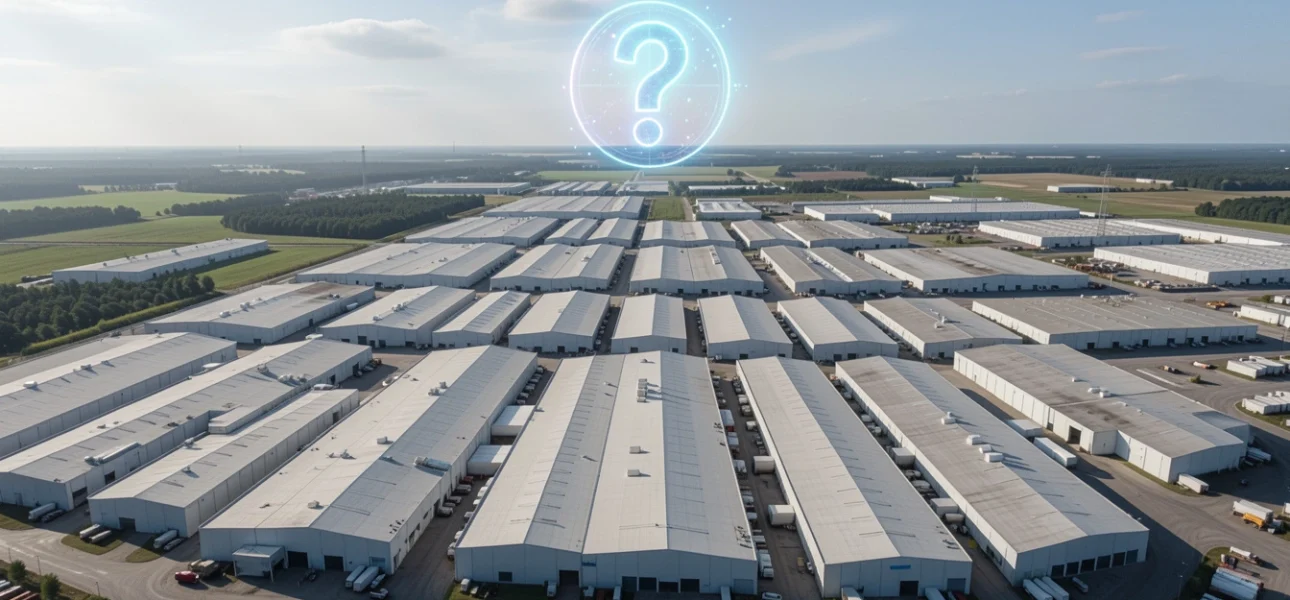
Economic uncertainty has become the defining characteristic of today’s European business environment. From persistent inflation and elevated interest rates to geopolitical tensions, supply chain disruptions, labour shortages, and evolving sustainability regulations, industrial businesses are operating in a market where preserving liquidity is just as important as driving growth. While many companies have invested heavily in logistics and industrial real estate over the past two decades, a growing number of business leaders are now asking a different question: Should capital remain tied up in owned real estate when it could be fuelling business growth?
For many industrial and logistics companies across the Netherlands and Europe, the answer lies in a strategic financial solution that is gaining renewed momentum – Sale & Leaseback.
Rather than viewing industrial properties, warehouses, manufacturing facilities, or distribution centres solely as operational assets, forward-thinking organisations are increasingly recognising them as significant sources of untapped capital. Sale & Leaseback allows businesses to unlock the value embedded within their real estate while continuing to operate seamlessly from the same location, creating financial flexibility without disrupting day-to-day operations.
Why Economic Uncertainty is Changing Capital Allocation
European businesses are facing a unique combination of economic challenges. Financing costs remain considerably higher than they were just a few years ago, making traditional borrowing less attractive. At the same time, companies continue investing in automation, robotics, artificial intelligence, digital supply chains, sustainability initiatives, and operational expansion.
For logistics operators, manufacturers, and industrial occupiers, these investments are no longer optional, they are essential for remaining competitive.
This has fundamentally changed how corporate finance teams evaluate owned real estate. Instead of treating property ownership as a long-term investment strategy, many organisations now see it as capital that could be better deployed into higher-return business initiatives.
Sale & Leaseback enables businesses to convert illiquid real estate into working capital without relocating operations or interrupting production. This approach improves liquidity, strengthens balance sheets, and provides financial flexibility during periods of market volatility.
The Netherlands: Europe’s Logistics Powerhouse
The Netherlands continues to be one of Europe’s most important logistics hubs. Strategic locations such as Rotterdam, Venlo, Tilburg, Moerdijk, Eindhoven, Breda, Arnhem-Nijmegen, and Schiphol connect global supply chains through world-class infrastructure, making Dutch logistics assets highly attractive to institutional investors.
Driven by the growth of e-commerce, nearshoring, advanced manufacturing, pharmaceutical logistics, food distribution, and third-party logistics (3PL), demand for high-quality logistics facilities remains resilient despite broader economic uncertainty.
At the same time, land scarcity, stricter environmental regulations, and limited development opportunities have increased the strategic value of existing industrial assets.
For occupiers, this presents an opportunity. Businesses that own valuable logistics facilities can unlock substantial capital without sacrificing operational continuity.
Why Sale & Leaseback Makes Strategic Sense Today
The purpose of a Sale & Leaseback transaction is not simply to generate cash. It is about improving capital efficiency.
Instead of carrying significant amounts of capital in real estate, companies can redirect those funds toward investments that generate stronger operational returns.
This capital may support:
- Warehouse automation and robotics
- Artificial Intelligence and digital transformation
- Supply chain optimisation
- Expansion into new European markets
- Sustainability upgrades
- Manufacturing capacity expansion
- Debt restructuring
- Strategic acquisitions
- Working capital requirements
For many CFOs, the comparison is straightforward. If the return generated from investing in the business exceeds the long-term return from owning property, redeploying capital becomes a logical financial decision.
Industrial Real Estate is Becoming a Strategic Financial Asset
Across Europe, industrial real estate is no longer viewed purely from an operational perspective.
Institutional investors continue seeking stable, income-generating logistics assets because they offer long-term cash flows supported by quality tenants. Even during periods of market uncertainty, prime logistics properties remain among the most attractive commercial real estate asset classes.
This growing investor appetite creates favourable conditions for owner-occupiers considering Sale & Leaseback transactions.
Companies benefit from immediate liquidity, while investors acquire high-quality assets leased to established businesses operating from strategic locations.
It creates alignment between occupiers seeking financial flexibility and investors seeking stable long-term income.
Supply Chain Resilience is Driving Investment Decisions
Recent years have fundamentally reshaped European supply chain strategies.
Businesses have shifted from prioritising cost efficiency alone towards building resilience. Nearshoring, regional manufacturing, inventory optimisation, and diversified supplier networks have become central to long-term planning.
As companies redesign supply chains, significant capital investment is required.
New distribution centres, automated fulfilment facilities, temperature-controlled warehouses, urban logistics hubs, and advanced manufacturing sites all require funding.
Rather than increasing debt levels, many businesses are using Sale & Leaseback transactions to finance these strategic initiatives.
By unlocking capital from existing facilities, companies can modernise operations while maintaining financial flexibility.
Sustainability is Reshaping Industrial Real Estate
Environmental, Social and Governance (ESG) requirements continue influencing investment decisions across Europe.
The Corporate Sustainability Reporting Directive (CSRD), evolving energy efficiency standards, and increasing investor focus on sustainable assets are encouraging businesses to upgrade existing facilities.
Energy-efficient warehouses, rooftop solar installations, electric vehicle charging infrastructure, smart building technologies, and carbon reduction initiatives require substantial investment.
Sale & Leaseback provides access to capital that can accelerate these sustainability programmes without placing excessive strain on operational cash flow.
For businesses pursuing long-term ESG objectives, the strategy supports both financial and environmental performance.
The Rise of Built-to-Suit and Modern Logistics Facilities
The rapid evolution of logistics operations is creating demand for larger, smarter, and more technologically advanced industrial facilities.
Automation, autonomous material handling systems, high-bay warehousing, cold storage infrastructure, and AI-driven inventory management require purpose-built properties capable of supporting future operational needs.
Many organisations are now evaluating whether retaining ownership of ageing facilities aligns with long-term business strategy.
Unlocking capital from mature assets enables companies to invest in next-generation logistics infrastructure designed for future growth.
Why Timing Matters
Economic uncertainty often causes businesses to postpone strategic decisions. However, periods of uncertainty also create opportunities to strengthen long-term financial resilience.
Waiting until liquidity becomes constrained limits available options.
Businesses that proactively optimise their balance sheets are typically better positioned to invest during market recovery, respond to new opportunities, and withstand unexpected economic shocks.
Sale & Leaseback is therefore not a reactive financing tool, it is a proactive capital strategy.
Companies that act early gain the flexibility to make decisions based on growth rather than financial constraints.
A Long-Term Partnership, Not Just a Transaction
Successful Sale & Leaseback transactions extend beyond real estate ownership. They require investors who understand industrial operations, long-term occupancy requirements, and the strategic importance of operational continuity.
This is where experienced logistics real estate investors create lasting value.
As a direct investor in logistics and industrial real estate across the Netherlands, RENEW Real Estate (RRE) works closely with owner-occupiers to structure Sale & Leaseback solutions that align with long-term business objectives. Rather than approaching each acquisition as a standalone transaction, RENEW Real Estate focuses on building enduring partnerships that enable companies to unlock capital while continuing to operate from strategically important facilities.
Whether the asset is a distribution centre, manufacturing plant, warehouse, cross-dock facility, high-bay logistics centre, or temperature-controlled industrial property, every transaction is designed around operational continuity, financial flexibility, and sustainable long-term growth.
The Constant Principle
Economic cycles will continue to evolve, but one principle remains constant: capital should work where it creates the greatest value.
For industrial businesses across the Netherlands and Europe, owned real estate represents far more than bricks and mortar, it represents an opportunity to release capital, strengthen financial resilience, and invest confidently in the future.
As logistics networks become increasingly automated, sustainable, and technology-driven, businesses that embrace smarter capital allocation strategies will be better equipped to adapt, compete, and grow.
In an environment where agility has become a competitive advantage, Sale & Leaseback is no longer simply a real estate transaction, it is a strategic capital decision that enables industrial and logistics businesses to transform property ownership into a catalyst for long-term business growth.