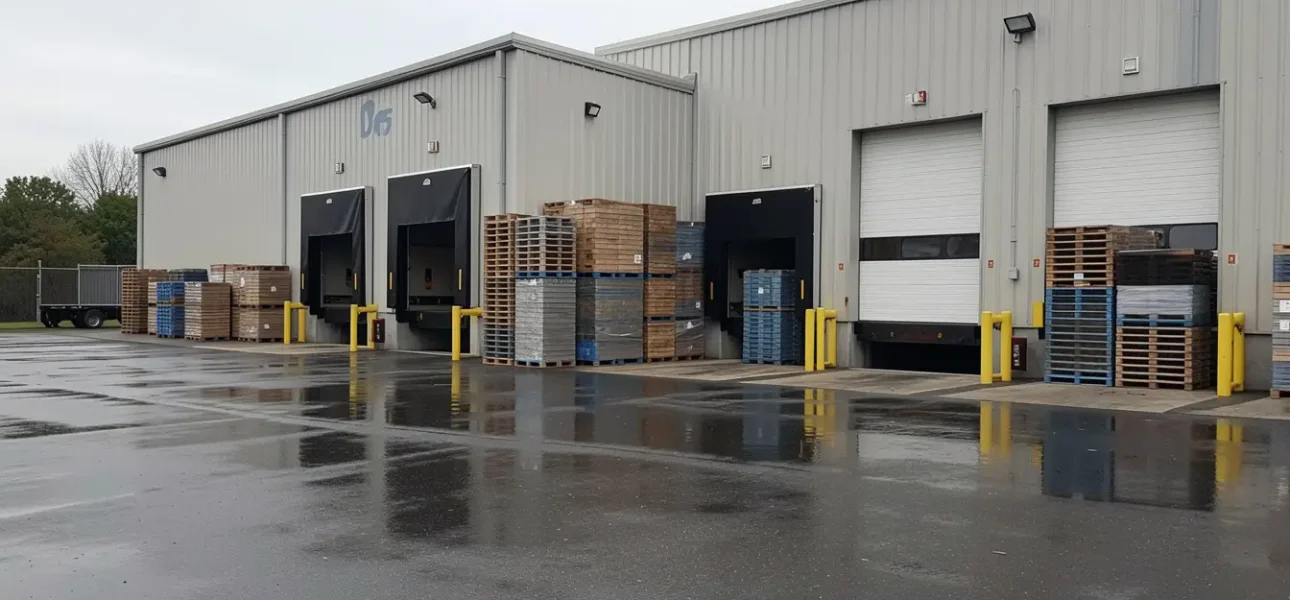
European logistics real estate is undergoing a structural transformation. For years, large single-tenant distribution centres dominated supply chain infrastructure, particularly in key logistics hubs across the Netherlands and wider Europe. However, as supply chains evolve and urban delivery expectations intensify, small-bay logistics is emerging as a crucial complementary asset class. These flexible, multi-tenant logistics spaces are becoming increasingly important in dense urban markets where speed, adaptability, and proximity to customers matter more than scale alone.
Across European cities, occupiers are rethinking their logistics footprints. Instead of relying solely on large regional warehouses located on the outskirts of metropolitan areas, companies are deploying smaller, strategically positioned urban facilities. This shift is creating strong demand for small-bay logistics real estate, compact warehouse units designed to support last-mile delivery, service logistics, reverse logistics, and urban distribution.
What Defines Small-Bay Logistics in Real Estate Terms
Small-bay logistics facilities typically consist of units ranging from approximately 200 to 2,000 square metres. These properties are usually multi-tenant, allowing multiple occupiers to operate within a single asset. They often feature flexible loading configurations, moderate clear heights, and layouts suitable for both storage and light operational activities.
Unlike large distribution centres focused on high-volume throughput, small-bay logistics facilities prioritise accessibility and flexibility. They are commonly located within or close to urban environments, enabling occupiers to serve dense population centres efficiently. This makes them particularly suitable for e-commerce fulfillment, spare parts distribution, service logistics, and localised inventory management.
Urbanisation and Delivery Expectations Driving Demand
One of the primary drivers behind the rise of small-bay logistics is the growing expectation for faster deliveries. Same-day and next-day delivery models are becoming standard across European markets. To support these service levels, logistics operators need inventory positioned closer to consumers.
This is especially evident in the Netherlands, where dense population clusters within the Randstad region create strong demand for urban logistics space. Cities such as Amsterdam, Rotterdam, Utrecht, and The Hague require logistics infrastructure that can operate efficiently within constrained urban environments. Large warehouses located 50-80 kilometres away cannot always support rapid delivery requirements, making smaller urban nodes increasingly essential.
Small-bay logistics facilities fill this gap. They enable occupiers to position goods closer to end users while maintaining operational flexibility. As delivery speed becomes a competitive differentiator, these assets are transitioning from niche properties to core logistics infrastructure.
Land Scarcity in European Urban Markets
Land availability is one of the most significant constraints shaping logistics real estate in Europe. The Netherlands, in particular, faces limited availability of development land, strict zoning regulations, and increasing pressure to balance industrial use with residential and environmental priorities.
Because of these constraints, developing large new logistics parks within urban areas is often not feasible. Instead, developers and investors are focusing on smaller, flexible logistics formats that can be integrated into existing industrial zones or redeveloped brownfield locations. Small-bay logistics facilities require less land and can often be delivered through repositioning existing assets.
This trend aligns with broader European planning policies that prioritise efficient land use. Infill developments, brownfield conversions, and multi-tenant industrial parks are becoming more common across the Netherlands, Germany, and other densely populated regions.
The Shift Toward Multi-Tenant Logistics Real Estate
Another factor contributing to the growth of small-bay logistics is the shift toward multi-tenant logistics assets. Occupiers increasingly seek flexibility in lease structures and space requirements. Smaller, modular units allow companies to scale operations up or down depending on demand.
From an investment perspective, multi-tenant logistics properties also provide diversification. Instead of relying on a single occupier, landlords benefit from multiple tenants across different sectors. This reduces vacancy risk and enhances resilience during economic cycles.
Small-bay logistics facilities are naturally suited to this multi-tenant model.They attract a broad mix of occupiers, including:
- Third-party logistics providers
- E-commerce companies
- Service logistics operators
- Light manufacturers
- Spare parts distributors
- Last-mile delivery companies
Supply Chain Resilience and Network Decentralisation
European occupiers are also redesigning supply chains to improve resilience. Recent disruptions have highlighted the risks of relying on single large distribution hubs. As a result, companies are adopting decentralised logistics networks with multiple nodes.
Small-bay logistics facilities play an important role in this strategy. They function as regional or urban satellites supporting larger distribution centres. Goods can be transferred from national hubs to small-bay facilities, where they are positioned closer to final delivery points.
This hub-and-spoke model is gaining traction across Europe, particularly in the Netherlands, where strong infrastructure connections allow efficient movement between regional warehouses and urban distribution nodes.
Operational Advantages of Small-Bay Logistics
From an operational standpoint, small-bay logistics properties offer several advantages:
- Proximity to Customers
Urban locations reduce delivery times and transportation costs. Flexibility
Modular layouts allow occupiers to adapt space according to operational needs.Lower Entry Barriers
Smaller units are accessible to mid-sized and growing businesses.-
Support for Reverse Logistics
Returns processing requires flexible space close to consumers. -
Compatibility with Electrification
Urban logistics facilities can support electric vehicle fleets and charging infrastructure.
These advantages make small-bay logistics particularly relevant as sustainability and electrification become central themes in European logistics.
The Netherlands as a Leading Market for Small-Bay Logistics
The Netherlands is particularly well positioned for small-bay logistics growth due to several structural characteristics:
- High population density
- Strong e-commerce penetration
- Limited land availability
- Advanced road and multimodal infrastructure
- Concentrated urban clusters
Demand is especially visible in the Randstad logistics region, where occupiers require proximity to major consumer markets. Additionally, regions such as North Brabant and South Holland are seeing growing interest in smaller urban distribution facilities supporting regional logistics networks.
As logistics operations become more granular and demand-driven, the Netherlands is likely to remain at the forefront of this trend.
Investment Appeal of Small-Bay Logistics Assets
Investors are increasingly recognising the attractiveness of small-bay logistics real estate. Several factors support strong investment fundamentals:
- Structural undersupply in urban markets
- Diverse tenant base
- Rental growth potential
- Value-add repositioning opportunities
- Lower vacancy risk due to multi-tenant structures
In addition, older industrial assets located near urban centres can often be repositioned into small-bay logistics facilities. This creates opportunities for investors to unlock value through refurbishment and reconfiguration.
Role of Strategic Partnerships in Capturing Opportunities
As demand for small-bay logistics grows, identifying suitable locations, repositioning assets, and structuring investments requires deep market understanding and active participation.
RENEW Real Estate is actively involved as an investor in industrial and logistics real estate and acts as an advisor to institutional capital across core European markets. Through this dual role, RENEW Real Estate participates in logistics real estate acquisitions, repositioning strategies, and investment transactions focused on unlocking value from existing industrial assets and aligning them with evolving logistics requirements.
In land-constrained markets such as the Netherlands, repositioning existing properties into flexible logistics formats is often more viable than new development. By combining investment capabilities with advisory expertise, underutilised industrial facilities can be converted into multi-tenant logistics assets suited to urban distribution needs.
Small-Bay Logistics and Sale & Leaseback Opportunities
The emergence of small-bay logistics also creates opportunities for alternative transaction structures. Owner-occupied industrial properties located near urban centres can be repositioned into multi-tenant logistics facilities through sale and leaseback strategies. This allows occupiers to release capital while continuing operations in optimised space configurations.
From an investment perspective, these transactions create opportunities to acquire well-located urban industrial assets with strong fundamentals. By participating in sale and leaseback structures and repositioning strategies, investors can support operational continuity while enhancing asset value through conversion into flexible logistics formats.
Such approaches align with broader European trends where occupiers are unlocking capital from real estate while improving operational flexibility. Small-bay logistics formats provide an attractive outcome for both occupiers and investors.
Future Outlook
Looking ahead, small-bay logistics is expected to become an integral layer within European logistics networks. Large distribution centres will continue to play a critical role, but smaller urban facilities will increasingly support last-mile delivery and decentralised supply chains.
In the Netherlands, this evolution is likely to accelerate due to urban density, sustainability goals, and land constraints. Investors, occupiers, and partners who recognise this shift early will be better positioned to capture long-term value.
As logistics real estate continues to evolve, small-bay logistics stands out as a flexible, resilient, and strategically important asset class, one that is shaping the future of urban supply chains across Europe.