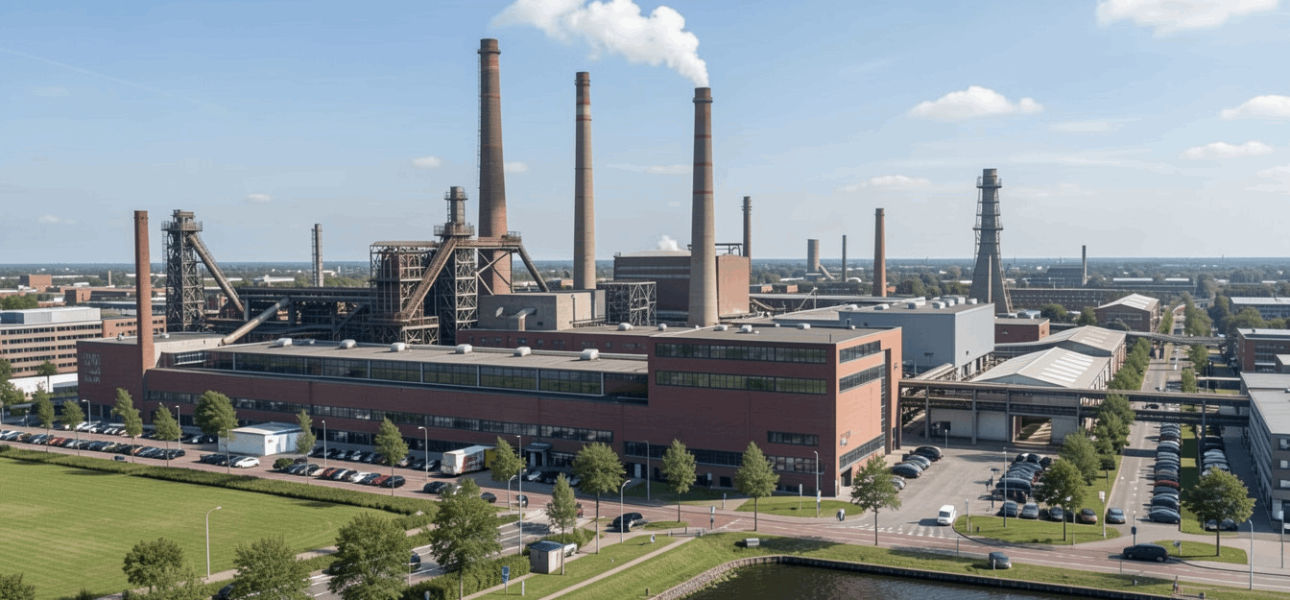
As a result, the redevelopment of obsolete industrial stock has become one of the most important economic themes shaping the logistics real estate market in the Netherlands and across Europe.
Rather than expanding onto new land, investors, developers, and occupiers are increasingly turning toward redevelopment and repositioning of existing industrial sites, transforming outdated warehouses and business parks into modern logistics facilities.
The Legacy of Industrial Land in the Randstad
The Randstad has historically been the industrial and logistical backbone of the Netherlands. Its proximity to major ports, airports, and consumer markets made it a natural location for factories, distribution centers, and industrial estates.
However, much of the existing stock was developed between the 1970s and early 2000s, when logistics requirements were very different. These buildings were designed for smaller truck flows, limited automation, and lower ceiling heights.
Today, many of these assets face functional obsolescence.
Across Europe, modern logistics assets are outperforming older facilities. Demand and leasing activity increasingly favor newly built or recently redeveloped logistics buildings, while aging properties struggle to attract tenants because they no longer meet operational requirements.
This has created a growing quality gap in the logistics real estate market, particularly in highly urbanized regions such as the Randstad.
Why Obsolete Industrial Sites Are Becoming Strategic Opportunities
Despite the challenges associated with outdated industrial properties, these sites represent some of the most strategically valuable real estate in the Netherlands.
Redeveloping obsolete industrial stock offers several economic advantages.
1. Land Scarcity in Core Logistics Regions
The Netherlands faces severe land constraints, especially in the Randstad. Environmental restrictions, zoning limitations, and government policies limiting land consumption have made greenfield development increasingly difficult.
As a result, developers are increasingly turning to brownfield redevelopment, repurposing former industrial sites into new logistics facilities.
Across Europe, brownfield sites are becoming a dominant development strategy. In some logistics markets, more than 40-50% of new logistics construction is already occurring on previously used industrial land.
This shift reflects the growing need to maximize the use of existing land rather than expanding into undeveloped areas.
2. Strategic Location Advantages
One of the key economic drivers of redevelopment is location value.
Older industrial areas in the Randstad often sit near:
- Major highways and multimodal corridors
- Ports such as Rotterdam
- Dense urban consumer markets
- Established labor pools
These characteristics are extremely valuable for modern supply chains.
Redeveloping such locations allows investors to create next-generation logistics facilities in prime urban locations, where new land is almost impossible to secure.
3. ESG and Sustainability Regulations
Sustainability has become a major driver of real estate redevelopment across Europe.
New regulations such as the Energy Performance of Buildings Directive (EPBD) and growing corporate ESG commitments are pushing occupiers toward energy-efficient logistics facilities with solar power, electrification infrastructure, and advanced building systems.
Older industrial buildings often fail to meet these standards.
Redevelopment allows developers to:
- Improve energy efficiency
- Integrate renewable energy systems
- Meet BREEAM and ESG requirements
- Reduce carbon footprints
These upgrades make redeveloped logistics assets far more attractive to both tenants and institutional investors.
The Financial Economics Behind Industrial Redevelopment
Redeveloping obsolete industrial real estate is not simply a planning decision, it is fundamentally an economic investment strategy.
Several financial dynamics are driving investor interest.
Value-Add Opportunities
Older industrial properties often trade at discounted values because of their outdated specifications. Investors can acquire these assets at relatively low entry prices and unlock value through redevelopment.
Once repositioned, the properties can generate:
- Higher rental income
- Longer lease terms
- Institutional-grade investment value
In the Netherlands, strong occupier demand and tight supply conditions have created opportunities for value-add strategies focused on upgrading obsolete logistics stock.
Institutional Capital and Logistics Investments
Institutional investors are increasingly targeting logistics and industrial real estate because of their stable income characteristics and long-term growth potential.
The redevelopment of industrial sites plays a key role in this capital flow.
Modern logistics facilities offer:
- Long-term lease agreements
- Creditworthy tenants
- Inflation-linked rental structures
These characteristics align well with the investment strategies of pension funds, insurance companies, and private equity funds.
Sale-and-Leaseback as a Redevelopment Catalyst
One of the most important financial structures supporting redevelopment in the Netherlands is the sale-and-leaseback transaction model.
In this structure:
- A company sells its operational industrial property to an investor
- The investor redevelops or upgrades the facility
- The company continues operating in the property under a long-term lease
This allows occupiers to unlock capital tied up in real estate, while investors gain exposure to essential logistics infrastructure with stable income streams.
Brownfield redevelopment and sale-and-leaseback strategies are increasingly aligned in the Dutch logistics real estate market, connecting sustainability goals with capital investment opportunities.
Emerging Trends Shaping Industrial Redevelopment in Europe
Redevelopment of obsolete industrial stock is closely linked with broader structural trends in logistics real estate.
Logistics CampusesThe traditional single-warehouse model is increasingly being replaced by multi-building logistics campuses.
These campuses provide:
- Shared infrastructure
- Multi-tenant flexibility
- Scalability for growing supply chains
Across Europe, this campus model is emerging as a new investment strategy for logistics real estate.
Distributed Logistics NetworksSupply chains are becoming more decentralized.
While the Randstad remains a core logistics hub, occupiers are also expanding into regional cities such as Venlo, Tilburg, Zwolle, and Almere to improve distribution efficiency.
Redeveloping older industrial sites in both core and secondary locations helps support these evolving logistics networks.
Automation and Smart WarehousingModern logistics facilities increasingly incorporate:
- Robotics and automation
- High-bay storage systems
- AI-driven warehouse management
- Electric fleet infrastructure
Redevelopment projects allow developers to integrate these technologies into existing logistics corridors.
The Strategic Importance of Redevelopment for the Randstad
The redevelopment of obsolete industrial stock plays a critical role in maintaining Randstad’s competitiveness as a European logistics hub.
Without redevelopment, the region risks:
- Losing tenants to newer logistics locations
- Falling behind in sustainability standards
- Underutilizing valuable industrial land
By upgrading outdated sites into modern logistics infrastructure, the Randstad can continue to serve as a gateway for European trade and distribution.
This transformation is not just about buildings, it is about aligning urban land use, infrastructure, capital, and supply chains.
How RENEW Real Estate Supports Industrial Redevelopment
As the logistics real estate market evolves, specialized partners play a key role in connecting capital, occupiers, and redevelopment opportunities.
RENEW Real Estate (RRE) operates at the intersection of these forces, focusing on logistics and industrial real estate investment opportunities across the Netherlands and Europe.
The firm supports clients through:
- Industrial and logistics acquisitions in strategic corridors
- Sale-and-leaseback transactions that unlock capital from operational real estate
- Logistics and industrial redevelopment opportunities
- Investment sourcing for institutional buyers
By combining market intelligence, investor networks, and deep sector expertise, RENEW Real Estate helps identify opportunities where obsolete industrial assets can be transformed into modern logistics infrastructure.
In a region like the Randstad, where land scarcity, sustainability pressures, and logistics demand intersect, this capability is becoming increasingly valuable.
As Europe’s supply chains continue to evolve, the redevelopment of aging industrial real estate will remain one of the defining themes of the logistics property market turning yesterday’s industrial legacy into tomorrow’s supply-chain infrastructure.