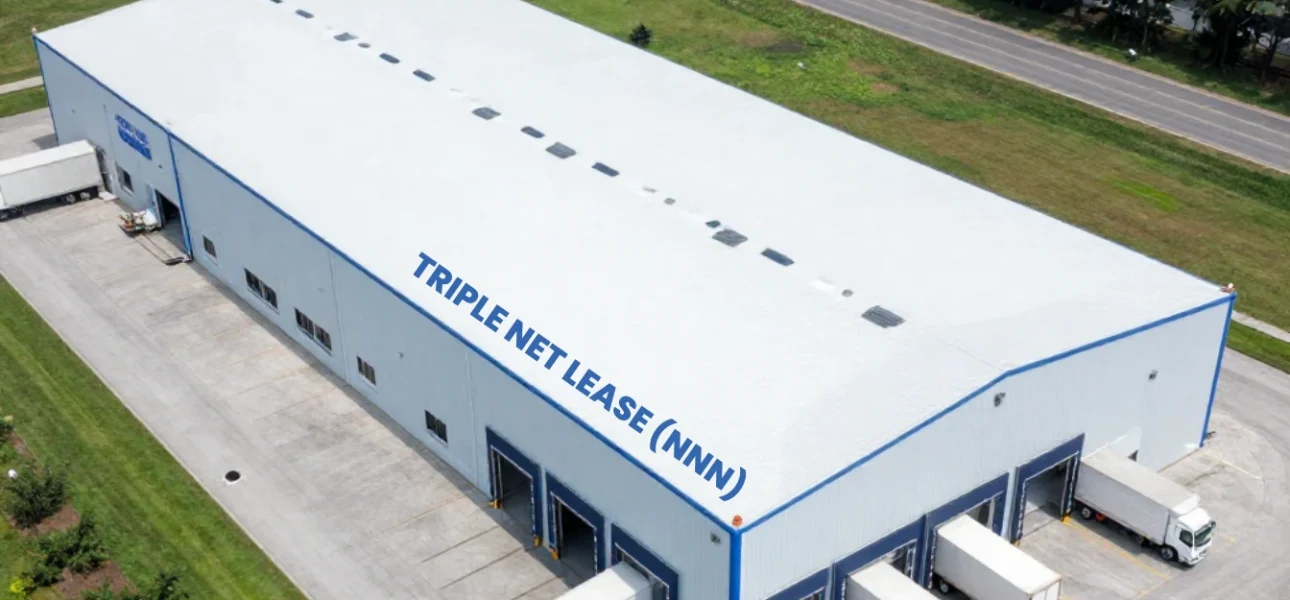
Over the past decade, logistics real estate has transformed into one of the most attractive investment sectors across Europe. What was once considered a niche asset class is now a core institutional investment category, driven by the rapid expansion of e-commerce, global supply-chain restructuring, and increasing demand for resilient distribution networks.
At the same time, investors are increasingly focused on income stability, operational efficiency, and inflation protection. This shift has triggered growing interest in a particular leasing structure across logistics assets: the triple-net (NNN) lease.
Across major logistics markets including the Netherlands, Germany, France, and the UK, triple-net structures are appearing more frequently in sale-and-leaseback deals, build-to-suit developments, and institutional acquisitions.
But does this mean triple-net leases are becoming the default structure for European logistics real estate? The answer lies in understanding the broader trends shaping the sector.
The Evolution of the European Logistics Real Estate Market
Logistics property has become one of the most resilient segments of European commercial real estate.
Several structural forces are driving this growth:
- Rapid expansion of e-commerce distribution networks
- Nearshoring and supply-chain diversification across Europe
- Growth of third-party logistics providers (3PLs)
- Increasing demand for modern, automated warehouses
- Institutional investors shifting capital from office and retail assets
According to industry research, 85% of real estate investors plan to allocate capital to logistics assets in the coming years, highlighting the sector’s strong long-term appeal.
Despite a slowdown in demand after the pandemic boom, the European logistics sector remains highly active. For example:
- European logistics take-up stabilised at 5-6 million square meters per quarter in 2025, reflecting steady occupier demand.
- Across major corridors, 18.5 million square meters of space were absorbed in 2025, driven by e-commerce and manufacturing reshoring.
- Average vacancy rates across Europe have risen slightly to around 5-6%, marking a shift toward a more balanced market.
These structural dynamics are also influencing how logistics properties are leased, financed, and owned.
Why the Netherlands Is a Strategic Logistics Gateway in Europe
The Netherlands remains one of the most important logistics real estate markets in Europe.
Its strategic position makes it a gateway for European trade and distribution:
- The country handles around 16% of Europe’s seaborne goods and accounts for 18% of EU imports.
- Major logistics hubs include Rotterdam, Venlo, Tilburg, Eindhoven, and Schiphol.
- The Port of Rotterdam, Europe’s largest port, serves as a critical entry point for global supply chains.
These advantages attract both international logistics occupiers and institutional investors.
Despite macroeconomic pressures, the Dutch logistics market remains resilient:
- Vacancy rates rose to about 5.7% by 2025, reflecting new supply and shifting occupier demand.
- Prime logistics yields in core European markets including the Netherlands, generally remain below 5.5%, demonstrating strong investor appetite.
Within this context, lease structures are evolving to match investor expectations for stable, long-term income streams.
What Is a Triple-Net Lease in Logistics Real Estate?
A triple-net (NNN) lease is a leasing structure where the tenant is responsible for three major cost categories:
- Property taxes
- Building insurance
- Maintenance and operational costs
In this structure, the landlord receives a “net” rental income, while most operational expenses are transferred to the tenant.
Triple-net leases are particularly common in single-tenant logistics facilities, where the occupier uses the building as a dedicated distribution center.
Typical features of NNN logistics leases include:
- Lease terms of 10-20 years
- Inflation-linked (CPI) rent escalation
- Minimal landlord responsibilities
- High-quality tenant covenants
This structure is highly attractive for institutional investors, as it creates predictable long-term income streams.
Why Triple-Net Structures Are Gaining Popularity in European Logistics
Several structural trends are driving the adoption of triple-net lease structures across the logistics sector.
- Institutional Capital Seeking Stable Income
Pension funds, insurance companies, and private equity funds increasingly view logistics assets as bond-like income investments.
Triple-net leases allow investors to:
- Reduce operational risk
- Predict long-term income streams
- Protect returns against inflation
- Minimize property management responsibilities
This aligns perfectly with the institutionalisation of the logistics sector.
- Growth of Sale-and-Leaseback Transactions
One of the biggest catalysts for NNN leases in Europe is the rise of sale-and-leaseback transactions.
In this structure:
- A company sells its logistics facility to an investor
- The company remains in the property as a tenant
- A long-term lease often triple-net is signed
For occupiers, this unlocks capital tied up in real estate.
For investors, it provides long-term income security.This structure has become increasingly popular among manufacturers, distributors, and logistics companies seeking balance sheet flexibility.
- Customised Logistics Facilities
Modern logistics facilities are highly specialised.
They often include:
- High-bay automated storage systems
- Robotics and sorting infrastructure
- Temperature-controlled zones
- Large truck courts and loading infrastructure
Because these buildings are tailored to operational needs, tenants prefer greater control over maintenance and upgrades making NNN leases practical.
- Inflation-Linked Lease Structures
European logistics leases are increasingly structured with CPI-linked rent indexation, ensuring rental growth keeps pace with inflation.
This protects investors from declining real returns while allowing tenants to maintain long-term occupancy stability.
Such structures are particularly attractive in long-duration logistics leases, where operational continuity is critical.
Are Triple-Net Leases Becoming the Default?
While triple-net leases are increasingly common, they are not universally dominant across all logistics assets.
Several emerging trends are shaping the future of lease structures.
Rise of Multi-Tenant Logistics Assets
Investors are showing growing interest in multi-tenant logistics facilities, which diversify risk across several tenants.
These properties may use modified lease structures rather than pure triple-net agreements.Sustainability and ESG Requirements
European real estate regulations are pushing logistics developers toward:
- Energy-efficient warehouses
- Solar rooftop installations
- Electrified logistics fleets
- Net-zero carbon logistics parks
Shifting Tenant Negotiation Power
With vacancy rates rising slightly across Europe, tenants now have greater negotiating power, particularly outside prime logistics hubs.
This may lead to more flexible leasing arrangements in certain markets.
The Future of Logistics Real Estate in Europe
Despite short-term fluctuations, the outlook for logistics real estate remains highly positive.
Several structural trends will continue driving demand:
- E-commerce penetration across Europe
- Automation of warehouse operations
- Supply-chain resilience and nearshoring
- Infrastructure investment and cross-border trade
These factors ensure that logistics real estate remains one of the most attractive sectors for global capital.
And within this evolving landscape, triple-net lease structures will likely remain a key component of institutional logistics transactions.
How RENEW Real Estate Supports Logistics Investors and Occupiers
As logistics real estate markets become more sophisticated, specialist advisory firms play a critical role in connecting investors, occupiers, and developers.
The firm supports clients through:
- Sale-and-leaseback transactions
- Off-market logistics and industrial acquisitions
- Investment sourcing for institutional buyers
- Strategic advisory for logistics occupiers
RENEW Real Estate also works with occupiers looking to unlock capital from operational real estate, enabling them to reinvest in core business activities while maintaining long-term operational control of their facilities.
By combining local market expertise with international investor networks, RRE helps identify opportunities in key logistics corridors across the Netherlands and Europe.
As the logistics sector continues to evolve with triple-net structures, sale-and-leaseback transactions, and institutional investment gaining momentum, RENEW Real Estate remains positioned at the intersection of capital, logistics infrastructure, and long-term value creation.
Key Questions About Triple-Net Logistics Leases
What is a triple-net lease in logistics real estate?A triple-net lease is a lease structure where the tenant pays property taxes, insurance, and maintenance costs in addition to rent. This provides predictable income for investors while giving tenants operational control over the facility.
Why are triple-net leases popular in logistics properties?They align with the operational needs of logistics occupiers and provide investors with stable, inflation-linked income streams with minimal management responsibility.
Why is the Netherlands important for logistics real estate investment?The Netherlands serves as a major European logistics gateway due to its strategic location, strong infrastructure, and major ports such as Rotterdam, making it a preferred destination for both occupiers and investors. While triple-net leases may not replace every leasing structure in European logistics real estate, their growing adoption signals a broader shift in how the sector is financed and operated. As logistics networks expand and investors seek resilient income streams, the alignment between occupiers and capital providers becomes increasingly important. In markets like the Netherlands where logistics infrastructure plays a central role in European trade, triple-net structures are helping bridge operational efficiency with long-term investment stability.