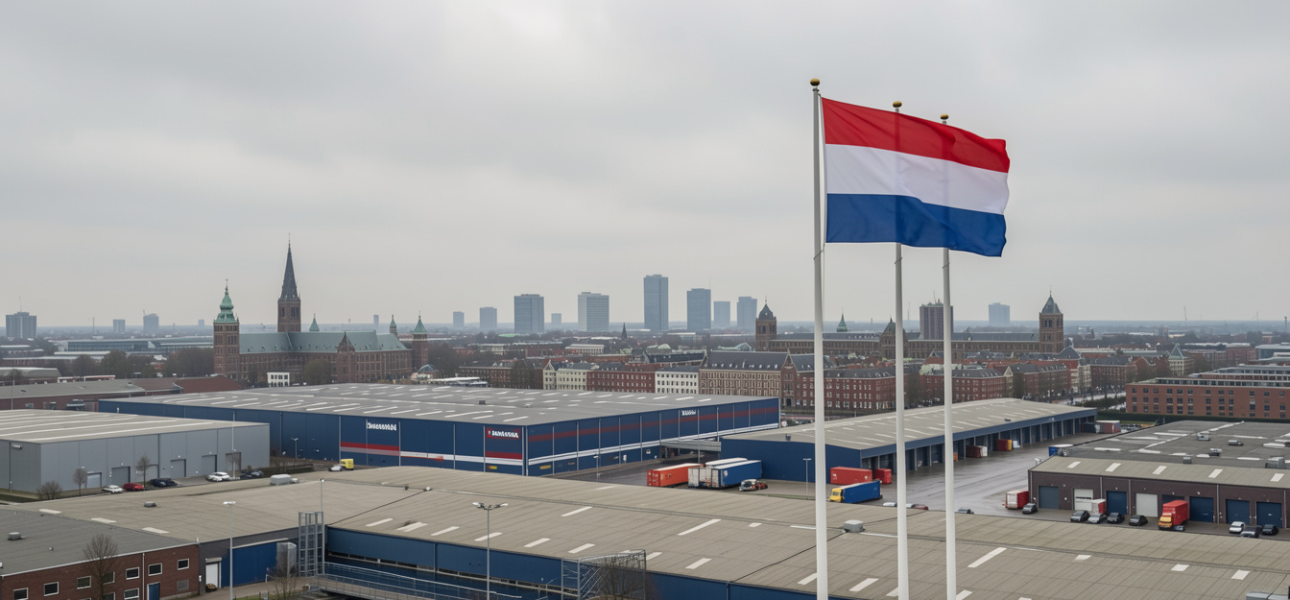
In the last decade, the geography of logistics in the Netherlands and Europe has been steadily transforming. Once dominated by well-established hubs such as Amsterdam, Rotterdam, and the Randstad megaregion, occupier demand is increasingly shifting toward regional Dutch cities like Venlo, Tilburg-Waalwijk, Zwolle, and Almere. This evolution is not accidental; it reflects deeper structural forces reshaping logistics real estate as occupiers, investors, and developers rethink how supply chains need to perform in a world marked by urban congestion, rising costs, sustainability imperatives, and changing consumer behaviors.
The Big Picture: From Centralised Big Hubs to Distributed Logistics Networks
Traditionally, logistics strategies centred on a few core hubs with excellent connectivity close to ports, airports, and major highways. In the Netherlands, Rotterdam and Amsterdam have long dominated this role due to proximity to large consumer markets, international gateways, and dense transportation networks. However, multiple forces are now intensifying the importance of regional nodes:
- Land Scarcity and Cost Pressure:
Prime logistics land near core hubs has become increasingly scarce and expensive, pushing occupiers to weigh alternatives. Zoning constraints and urban planning priorities also limit the availability of industrial land in these dense areas, making expansion difficult if not impossible. In contrast, regional cities offer more land at lower cost points, making them attractive for logistics operators seeking space for large-format facilities and expansion projects.
- Supply Chain Resilience and Nearshoring:
The rise of nearshoring in European supply chains driven by geopolitical uncertainty and companies’ desire to control lead times and reduce exposure to distant disruptions is raising the strategic value of secondary hubs. As assembly and sourcing shift closer to end markets, logistics networks need to be more distributed and responsive, rather than exclusively concentrated in one or two hotspots.
- Shifts in Occupier Requirements:
Occupiers today aren’t just looking for space; they are looking for capable space, assets that support automation, sustainability, scalability, and connectivity. Features like building height, energy infrastructure, automation readiness, and adaptability now rank highly in occupier preferences and often require the sort of configurability that older, centrally located warehouses cannot provide.
Why Regional Cities Are Now in the Spotlight
- Connectivity Beyond the Big Ports
Cities such as Venlo, Tilburg, and Zwolle are more than substitutes for Rotterdam or Amsterdam in many cases, they offer complementary strategic advantages. For example, Venlo’s location near the German Ruhr region and multimodal transport connectivity make it an ideal distribution gateway into Western Europe, combining road, rail, and inland barge access. Similarly, Tilburg and Eindhoven are well-positioned along major freight corridors reaching markets across Belgium and Germany while offering lower operational costs than the core cities.
This notion of distributed connectivity is becoming increasingly appealing to occupiers who value not just proximity to ports but access to a broader ecosystem of consumer and industrial markets. As logistics strategies evolve from simple point-to-point networks into multi-node systems, regional cities are emerging as strategic connectors rather than back-ups.
- Flexibility Meets Modern Logistics Needs
The traditional “big-box distribution centre” model is giving way to more flexible campus-style logistics parks and smaller sub hubs that better match modern supply chain flows. Large single-tenant warehouses were once dominant due to cost efficiency and simplicity. But as occupiers require greater operational sophistication incorporating omni-channel fulfilment, cold chain capabilities, and automation, the limitations of single-purpose assets have become more visible.
Logistics campuses, which cluster multiple facilities within a region, allow companies to diversify their footprints and tailor space to specific functions. This structure reduces concentration risk while supporting a broader range of use cases from high-velocity e-commerce fulfilment to specialised temperature-controlled distribution.
These trends have empowered regional cities to compete with and in some cases, outperform traditional logistics hotspots by offering the scale, flexibility, and innovation occupiers’ increasing demand. - Sustainability, Regulation and Urban Constraints
Dutch and European regulators have implemented some of the most forward-looking environmental mandates in the logistics market. Zero-Emission Zones (ZEZ-Fs), strict emissions standards, and clean air requirements are reshaping where and how logistics operations are built and deployed. In major urban centres, these policies have created both limitations on heavy traffic and heightened costs for compliance, encouraging occupiers to find locations that can support green infrastructure and low-emission operations without excessive regulatory burden.
Regional cities can often accommodate larger footprints and enable sustainable design features more readily than denser metropolitan hubs. This includes space for renewable energy integration, EV charging, and advanced energy systems that occupiers now prioritise as part of their ESG strategies, often a key requirement for modern lease agreements and sale & leaseback structures.
>> Explore Our Real Estate Logistics Projects Across Netherlands Cities
The Occupier’s Perspective: Tactical and Strategic Drivers
For logistics occupiers, selecting a location is no longer simply about proximity to consumers or ports; it is about optimisation of capital, operational resilience, and long-term strategic alignment.
Some of the key factors shaping these decisions include:
- Total cost of occupancy: not just rental rates, but energy costs, compliance expenses, and labour accessibility
- Operational flexibility: automation, last-mile fulfilment, and scalability
- Regulatory and sustainability alignment: meeting stringent ESG criteria and preparing for future regulation
- Network efficiency: integration within multi-node distribution strategies that reduce transit times and increase supply chain resilience
As occupiers evaluate these criteria, regional cities frequently emerge as preferred options because they offer a blend of connectivity, capability, and capacity that older or saturated logistics hubs simply cannot match.
The Role of Strategic Real Estate Solutions
In this evolving landscape, logistics real estate partners play a crucial role in enabling occupier success and driving broader market transformation. RENEW Real Estate (RRE) is one such firm actively shaping this real estate logistics shift across the Netherlands and Europe. RRE delivers a comprehensive suite of property investment solutions tailored to the needs of modern logistics markets. This includes targeted acquisitions of high-potential logistics and industrial assets in both core and emerging regional locations, as well as structured sale & leaseback transactions that enable occupiers to unlock capital tied up in owned real estate and reinvest it into operational growth, automation, sustainability initiatives, or working capital expansion. In addition, RRE engages in development partnerships, funding and structuring new commercial, logistics, and industrial facilities that align with the technical, operational, and environmental requirements of today’s occupiers. By combining deep market insight with capital structuring expertise, RRE supports both occupiers and investors in navigating a dynamic logistics real estate environment, particularly in regional hubs that are fast becoming the next frontier of European supply chain networks.
European Context: Broader Trends Amplifying Dutch Shifts
Although the Netherlands sits at the centre of Europe’s logistics network, similar shifts are playing out across the continent:
- Secondary hubs in Germany (e.g., Leipzig, Hanover) and Poland (e.g., Wroclaw, Poznan) are gaining traction as occupiers seek alternatives to congested metros
- Micro-fulfilment and urban logistics nodes are becoming essential complements to regional networks, supporting faster delivery without saturating cities
- Cross-border investment flows are increasingly targeting logistics assets that offer diversified income streams, resilient demand, and adaptability to changing supply chain models.
These continental trends underscore how regionality isn’t a secondary strategy, it’s fast becoming core to logistics real estate planning.
Regional Cities as Strategic Logistics Anchors
The logistics landscape in the Netherlands is in the midst of a significant transition. While traditional hubs will continue to play a central role, regional Dutch cities are not just alternatives, they are strategic engines of supply chain realignment. With advantages in cost, capacity, connectivity, sustainability, and flexibility, these cities present compelling value propositions for occupiers and investors alike.
Occupiers are increasingly designing networks that balance the benefits of core hubs with the dynamism of regional locations. At the same time, capital partners like RENEW Real Estate (RRE) are enabling this transition through tailored investment solutions that align property strategy with business objectives.As the logistics real estate market continues to mature, the success of regional cities demonstrates a broader principle: resilience, adaptability, and strategic capital deployment define the winners in a rapidly evolving global logistics ecosystem.