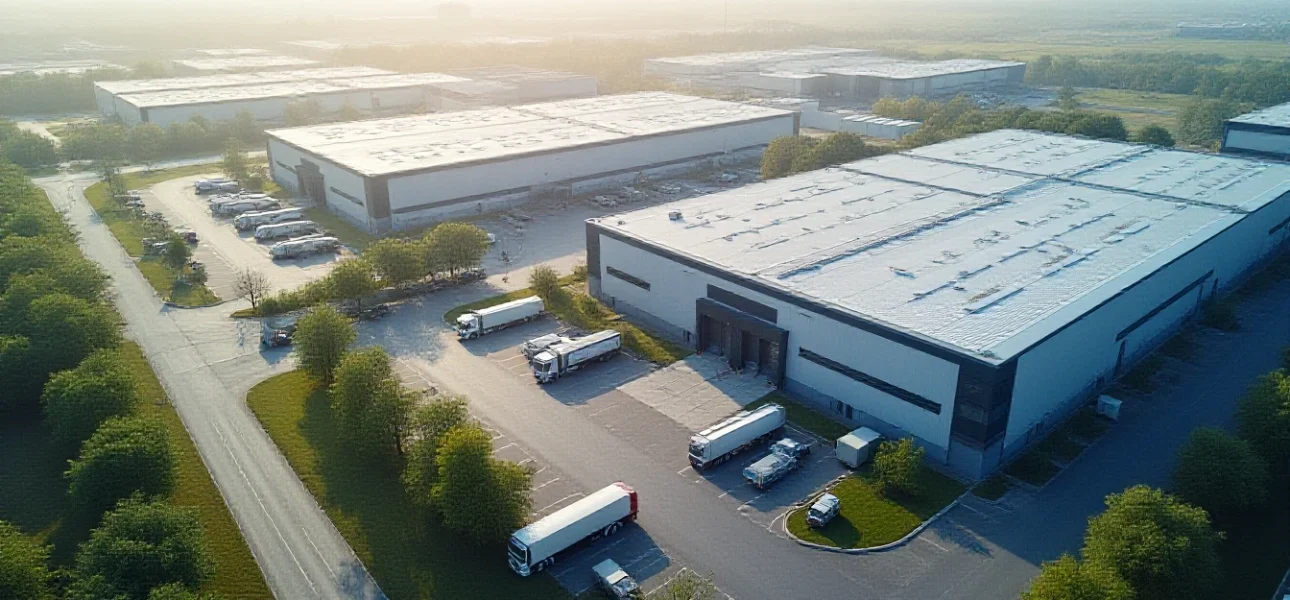
Across Europe, the logistics real estate landscape is undergoing a structural transformation. For decades, the dominant mindset was simple: large single‑tenant “big‑box” warehouses: big, standalone buildings leased to one tenant formed the backbone of distribution networks. But rising occupier expectations, tighter land supply, changing supply chain models, and investor preferences are driving a shift toward logistics campuses, larger, multi‑asset, multi‑user logistics ecosystems that offer far more flexibility, resilience, and strategic value for both occupiers and owners.
In regions like the Netherlands, where logistics infrastructure anchors Europe’s supply chains, this trend is especially pronounced. Rotterdam, Venlo, Utrecht, and other Dutch logistics corridors are not just hubs of cargo movement but also epicentres of evolving real estate strategies that reflect broader market trends across the continent.
From Big‑Box to Campus Models: What’s Driving the Shift?
- Changing Occupier Needs and Supply Chain Structures
Modern supply chains have shifted dramatically in recent years driven by e‑commerce growth, demand for faster delivery, and the need for flexibility across networks. Traditional single‑tenant warehouses, often located far from urban hubs, are excellent for bulk storage and national distribution, but they struggle to adapt to newer requirements such as omnichannel fulfilment, last‑mile delivery, and multi‑node distribution strategies.
Rather than relying on one large building serving a single function, occupiers increasingly prefer campus layouts, clusters of interrelated facilities that allow segmentation of functions (e.g., micro‑fulfilment, cross‑dock, returns processing) under one integrated ecosystem. This reduces reliance on a single asset, mitigates disruption risk, and enhances operational resilience.
- Land Scarcity and Urbanisation in Dutch Logistics Markets
The Netherlands, a densely populated and economically advanced country illustrates this shift vividly. Urbanisation, high land values, and strict zoning policies near cities like Amsterdam and Rotterdam limit the availability of large, cheap greenfield sites traditionally used for big‑box logistics.
As a result, developers and occupiers are increasingly looking to create campus‑style logistics parks that cluster multiple buildings on constrained land parcels. These campuses can provide a range of unit sizes, tenant configurations, and shared infrastructure that make better use of scarce land while supporting diversified logistics operations.
- Diversification of Tenant Mix and De‑risking Income Streams
From an investment perspective, single‑tenant assets carry inherent concentration risk: if the tenant relocates or their operations contract, the landlord faces a sudden revenue gap. Logistics campuses, often designed with multiple independent tenants, spread this risk and create more stable, diversified income streams.
Institutional investors including pension funds and insurance groups are now placing a premium on multi‑asset logistics parks because of this risk mitigation. They value the ability to leverage multiple leasing events, staggered lease expiries, and varying industry exposures within one campus.
- Sustainability and ESG Imperatives
Another critical driver is sustainability. Across Europe, legislation and corporate commitments from the EU Green Deal to national climate targets are pushing occupiers and developers toward ESG‑aligned logistics assets that minimise emissions, boost energy efficiency, and support smarter land use. In practice, this means logistics campuses are often designed with features such as solar installations, EV charging infrastructure, automated systems to reduce energy consumption, and stormwater management. These campuses can also more easily incorporate brownfield sites regenerating former industrial land into modern logistics hubs that satisfy both sustainability goals and real estate demand.
Occupiers are increasingly willing to pay a premium for sustainable logistics space. According to market research, a significant majority of logistics occupiers in the Netherlands are prepared to pay more for buildings with strong environmental credentials, reinforcing why investors and developers prioritise ESG‑aligned logistics campuses.
- European Capital Trends and Investor Appetite
Logistics real estate has proven resilient even amid broader investment slowdowns in other property sectors. Despite economic uncertainty, industrial and logistics property accounted for a growing share of European real estate investment, reflecting both strong occupier fundamentals and investor confidence in long‑term returns.
The Netherlands with its world‑class ports (like Rotterdam, Europe’s largest), advanced multimodal connections, and strategic position within the EU continues to attract cross‑border capital seeking exposure to logistics. This is evidenced by major portfolio acquisitions and the proliferation of institutional interest in Dutch logistics parks.
Investors now view logistics campuses often incorporating both existing assets and new developments as core components of their portfolios. The diversity of tenants, scale of infrastructure, and strategic positions of these campuses provide inflation‑linked income potential and resilience against localized demand fluctuations.
- The Role of Sale & Leaseback in Supporting Campus Growth
Sale & leaseback transactions have become an increasingly important capital strategy across Europe, especially in the Netherlands. Rather than tying up capital in property ownership, occupiers can sell strategically located logistics assets to investors and lease them back under long‑term agreements. This unlocks liquidity for operational growth, automation, or expansion into campus networks.
Sale & leaseback deals also appeal to investors as a way to acquire logistics properties with stable income streams and strong tenant covenants. In high‑rate environments, where refinancing becomes more challenging or costly, sale & leaseback structures offer a compelling alternative that aligns with campus‑oriented portfolios.
What This Means for Occupiers and Owners
- For occupiers, logistics campuses represent a way to:
- Enhance supply chain resilience by spreading operations across multiple buildings
- Reduce capital tied up in real estate and reinvest in core business activities
- Access modern, flexible, and ESG‑aligned facilities that match evolving operational needs
-
For owners and investors, campuses offer:
- Diversified rental streams reducing tenant concentration risk
- Opportunities for phased development and incremental leasing
- Attractive long‑term returns supported by strong occupancy demand
- Sustainability credentials that meet institutional investment criteria
The Netherlands: A Centre of Logistics Campus Innovation
The Netherlands plays a pivotal role in this transition. Its dense population, premium infrastructure, and scarcity of large greenfield sites have accelerated the adoption of logistics campuses over traditional single‑asset investments. Dutch logistics corridors now blend multi‑tenant estates, brownfield redevelopments, and flexible space portfolios that serve a wide range of occupier needs from e‑commerce fulfillment to third‑party logistics and temperature‑controlled distribution.
The country’s strategic position also makes it a primary gateway for capital flows targeting European logistics. Investors are keen to secure well‑located logistics campuses that offer scalable growth, diversified risk profiles, and predictability in cash‑flows even in uncertain economic conditions.
The Campus Model as the New Standard
Increasingly, logistics campuses are replacing single large warehouses as the preferred model for real estate investment and occupier networks. Their emergence is rooted in operational flexibility, diversification, sustainability, strategic location advantages, and evolving capital strategies that meet modern supply chain demands.
As occupiers and owners consider their next moves, prioritising campus‑oriented real estate solutions can ensure they stay ahead of market dynamics achieving operational efficiency and sustainable value creation simultaneously.
Facilitating the Next Generation of Logistics Investment Solutions
In this evolving landscape, RENEW Real Estate (RRE) has positioned itself as an active participant across core industrial and logistics real estate investment strategies in the Netherlands and Europe. The firm’s offerings align with the needs of both occupiers and property owners seeking to capitalize on the logistics campus trend and broader market shifts.
RRE’s property investment solutions include:
- Acquisitions: targeting high‑demand logistics corridors and strategic real estate assets that support multi‑asset ecosystems
- Sale & Leaseback transactions: providing occupiers with liquidity while enabling long‑term operational continuity in quality logistics facilities
- Developments: delivering modern, future‑ready industrial and logistics properties designed to meet the needs of today’s occupiers and investors
By focusing on well‑located, resilient, and future‑proof logistics assets, RRE supports owners and occupiers in navigating the shift from single‑asset investments to integrated logistics campuses that deliver operational flexibility and long‑term value in an increasingly competitive European market.